Apr 22, 2026 - 5 min read
The Knowledge That Walks Out the Door
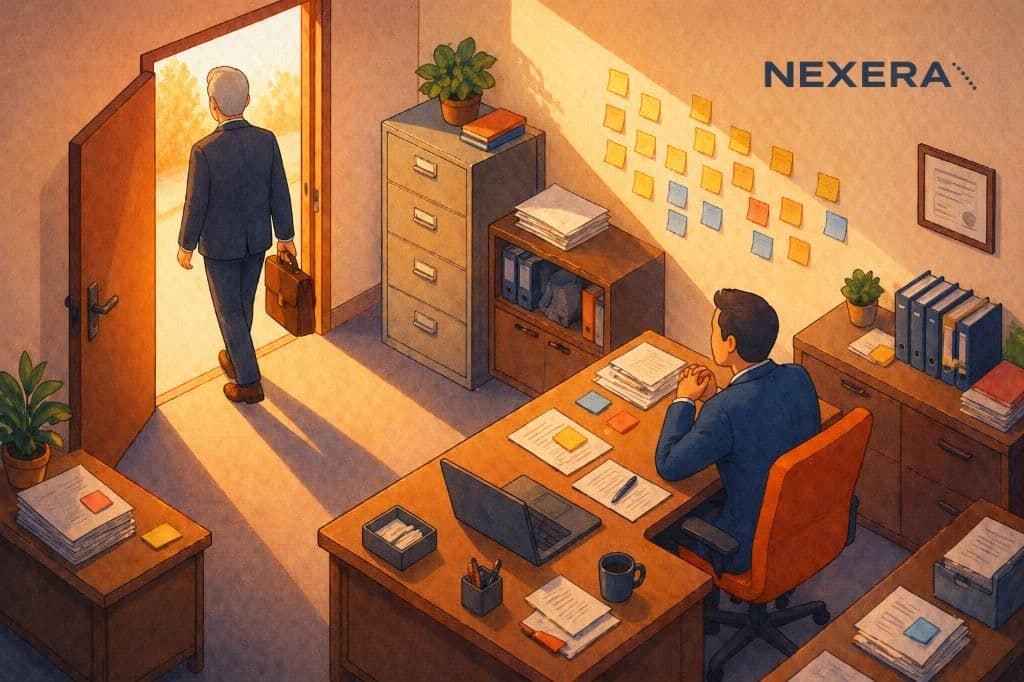
A general manager I met at a networking event in Jersey told me he stopped sleeping well in February.
A general manager I met at a networking event in Jersey told me he stopped sleeping well in February.
Not because of revenue. Not because of a bad client. Because his operations lead, a guy who has been with him for 19 years, casually mentioned he was thinking about retiring.
This is the person who knows why one vendor gets paid net 30 and another gets paid net 45. The person who can look at a job and price it within 3% in his head. The person who remembers that the building on 6th Avenue has a weird HVAC situation that broke three trucks before they figured it out.
None of this is written down. None of it is in a system. It is all living, quietly, inside one person.
And in 18 months, it is walking out the door.
Every small business has this person
You know who yours is.
It is the office manager who remembers which clients always call back in Q4. The foreman who has 20 years of tribal knowledge about which subcontractors are actually reliable. The bookkeeper who knows why a certain line item has been adjusted every March since 2011.
These people are the nervous system of your business. They are also, almost always, the reason your business runs smoothly while your competitors' businesses don't.
The problem is, when they leave, a lot leaves with them.
A Gartner survey out this year found that 47% of digital workers struggle to find the information or data they actually need to do their jobs. In most small businesses, that number is higher. A lot higher. Because the "knowledge system" is just a senior person's memory.
The math is uglier than most owners realize
Replacing an experienced employee costs real money. Recent research pegs it at close to $49,000 when you factor in recruiting, training, and lost productivity while the new person ramps.
But that is the visible cost. The invisible cost is worse.
When a 20-year employee leaves, the new hire can learn the playbook. They cannot learn the exceptions. They don't know that one customer prefers email at 7am. They don't know that one vendor always inflates freight on the first invoice and needs to be pushed back.
That stuff takes years to relearn. And while it is being relearned, mistakes get made, deals get lost, and margins get thinner.
The signs you have a tribal knowledge problem
You probably do. Here is how to tell.
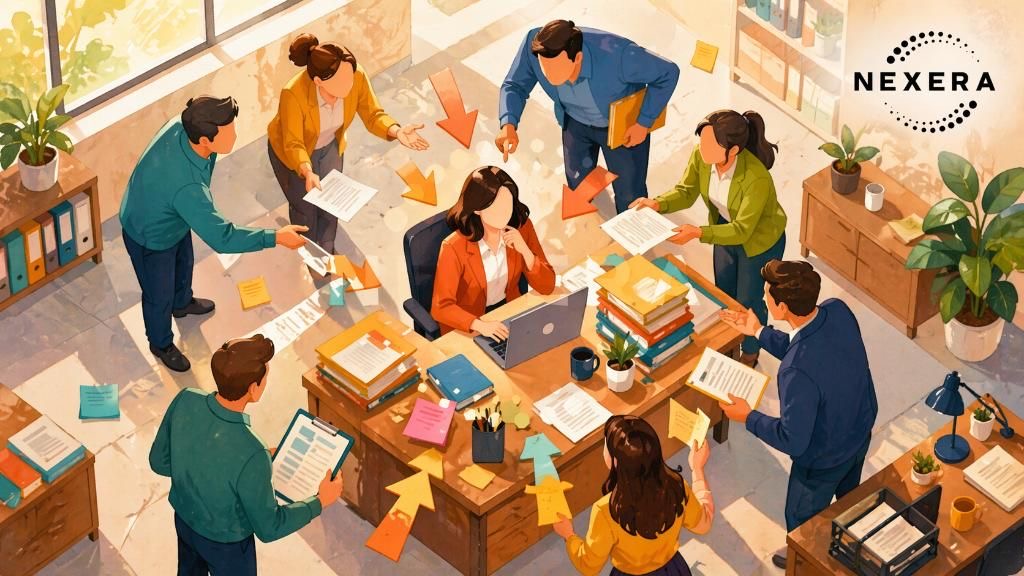
When one person is out sick, a lot of other people cannot do their work. When a question comes in, it always ends up in the same person's inbox. When a new hire joins, you tell them "just ask Susan." When something weird happens, only one person knows how to fix it.
If three of those sound familiar, you are not running a business. You are running a single point of failure with a logo.
What AI-powered knowledge capture actually looks like
Here is where this used to be hopeless.
For years, capturing tribal knowledge meant asking your senior people to write SOPs. Nobody writes SOPs. They have real work to do. And even when they try, they leave out the parts that matter most, because those parts feel obvious to them.
AI changes that equation.
Instead of asking people to document, you let them work. An AI tool records their screen or their phone while they do the task. It transcribes what they say out loud, watches what they click, and automatically generates a written procedure with screenshots, decision points, and notes on why they did things a certain way.
A 30-year-old platform would have called this screen recording. A 2026 AI platform does a lot more. It asks follow-up questions. It spots the parts you skipped. It turns one hour of real work into a document your whole team can actually use.
Then it gets better. Because once you have 50 of these documents, AI search pulls the right answer instantly when anyone on your team asks a question. New hires stop interrupting senior people. Senior people get their time back. And the playbook finally exists outside of someone's skull.
The businesses doing this are ahead of this curve
AI-powered knowledge management is not a small category anymore. The market grew from $5.23 billion in 2024 to $7.71 billion in 2025, and it is on track to pass $35 billion by the end of the decade. The reason is simple. Businesses finally figured out that their biggest risk is not competitors. It is the quiet, steady exit of the people who hold everything together.
The ones getting ahead are not the ones building massive knowledge bases from scratch. They are the ones capturing 15-minute chunks of what already lives in people's heads, one task at a time.
Where to start
Pick one person. Not your best person. The person whose absence would create the most chaos. That is your starting point.
Then pick one process. The one that always breaks when they are out. Document it with AI. Move on to the next one.
In 90 days, you will have 20 to 30 processes captured. In 6 months, you will have a working playbook. In a year, the business runs without anyone's head being the only copy.
This is not about replacing that person. It is about making sure when they take a vacation, or retire, or just have a bad week, your business does not go with them.
The bottom line
The most valuable asset in most small businesses is not the equipment, the real estate, or even the customer list. It is the accumulated know-how of a few key people.
AI is the first technology that has actually made it possible to capture that know-how without asking those people to do a second job writing it all down.
If you have a senior person you would lose sleep over losing, start there. If you don't know where to start, that is exactly the kind of conversation we have with clients all the time.
The knowledge walks out the door eventually. The question is whether you still have a copy.
Want to figure out where your tribal knowledge is sitting and how to capture it before it leaves? Visit nexeraintelligence.com to book a free consultation. We'll walk through where your business is most exposed and build a plan to close the gap.
Want one of these every other week?
Field notes from active Nexera engagements. No newsletter theater, no growth-hacks. Drop a line on a 30-min consult and we will add you to the rare-send list.