
May 1, 2026 - 5 min read
Your AI Is Now Your Front Door
A new customer's first interaction with your business probably is not with a person anymore.
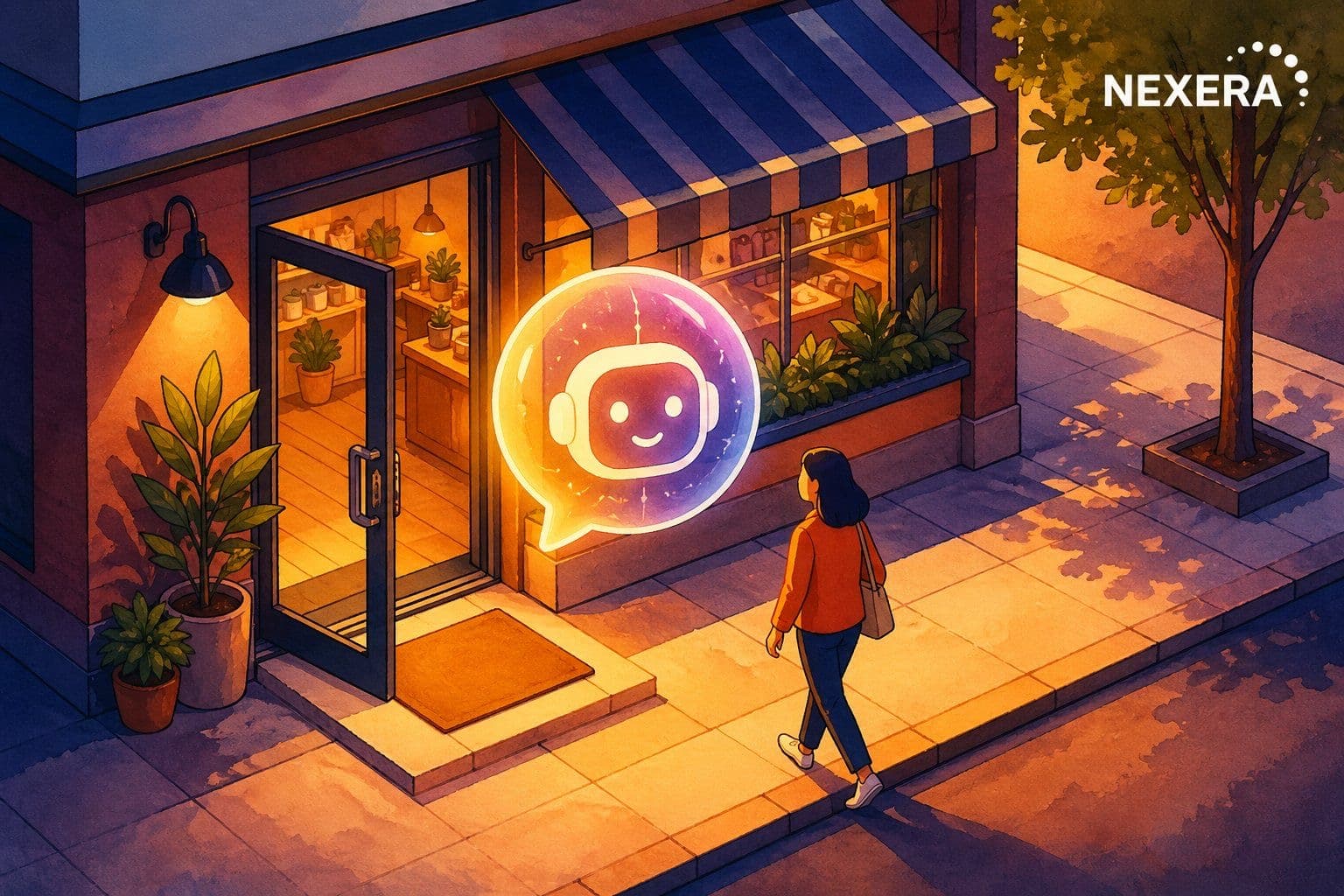
A new customer's first interaction with your business probably is not with a person anymore.
It is a chatbot on your homepage. An auto-reply to a contact form. A scheduling assistant that picks the meeting time. A follow-up email written by an AI that learned your tone from old emails.
By the time someone reaches a human, they have already had four or five conversations with your AI. And most business owners have never read those conversations.
A recent U.S. Chamber of Commerce report found that 62% of small businesses now use AI in both customer service and marketing. Two years ago that number was around 30%. The front door to your business changed quickly, and mostowners are still picturing the old one.
The Door You Did Not Notice
When you imagine someone reaching out to your business, you probably picture a phone call or a form filled out by a real person, ending up in your inbox.

What is actually happening is different.
A potential customer lands on your site. A widget pops up offering help. They type a question. An AI answers with a script someone set up six months ago. They book a time using a calendar bot. They get a confirmation email written in a tone the AI guessed at. If they go quiet for three days, an AI sends a follow-up.
All of that happens before you know they exist.
The Voice You Did Not Choose
Here is the part that catches owners off guard. The AI handling all of this is using a voice. It has a tone. It makes jokes or it does not. It uses emojis or it does not. It says "Hey there!" or "Good morning."
Most of those choices were made by default. Whoever installed the chatbot left the template on. Whoever set up the auto-reply used the suggested copy. Whoever connected the scheduler picked the standard confirmation email.
Your customers experience that voice as YOUR voice. Because to them, it is.
I worked with a high-end home services company in New Jersey last quarter. Their actual brand was warm and meticulous. Their chatbot was robotic and pushy. Customers were quietly bouncing because the first impression felt like spam. Nobody on the team had ever tested the bot themselves. They just knew leads felt soft.
Two days of tone fixes and the conversion rate on chat-initiated inquiries jumped almost 40%.
The Audit Almost No One Runs
Here is a free exercise. Pretend you are a stranger who heard about your business yesterday.
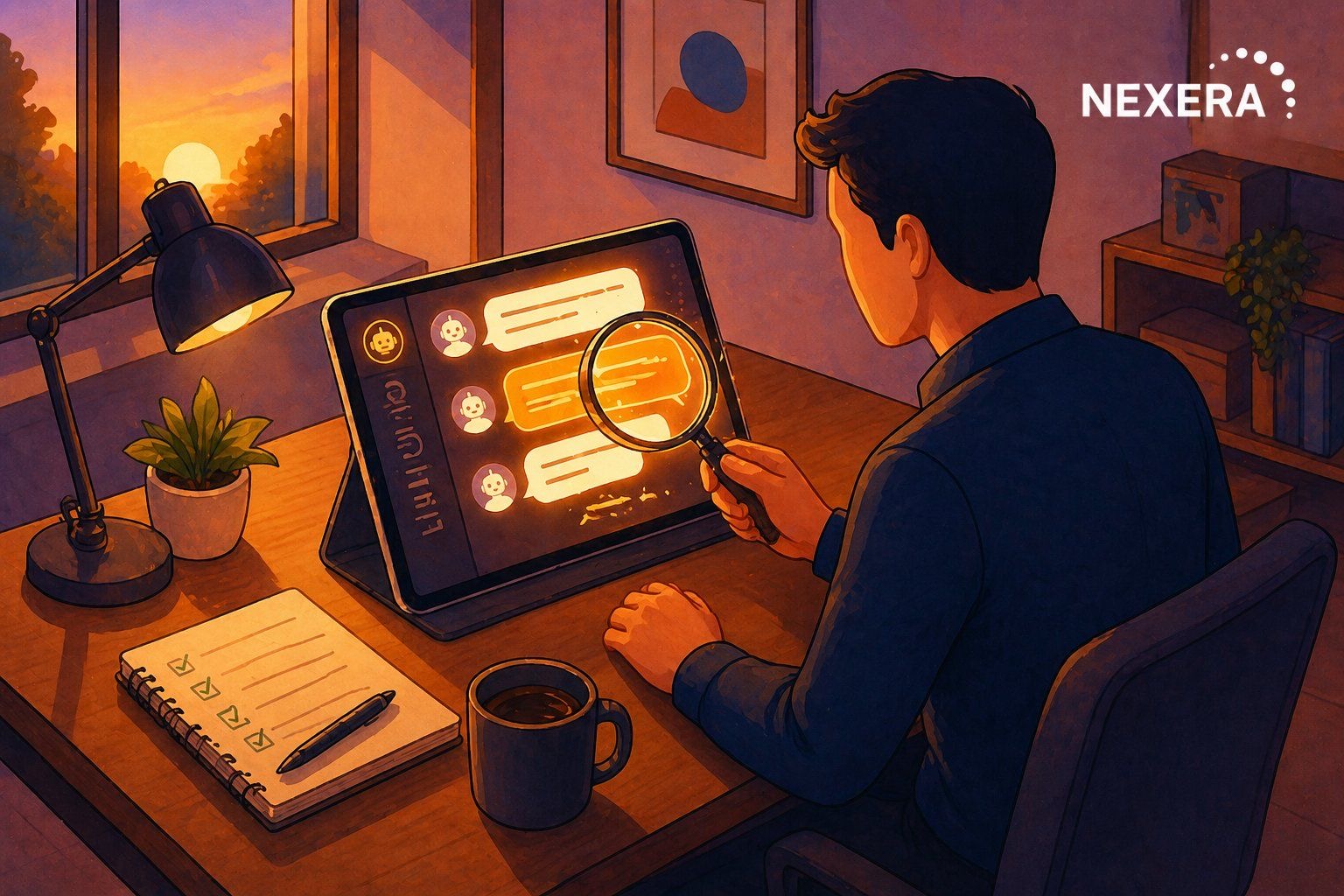
Go to your own website. Click the chat. Submit the contact form. Use the scheduling link. Wait for the follow-up. Read every word the AI sends you.
Most owners I do this with are surprised. Sometimes embarrassed. Sometimes a little annoyed at whoever set it up. The voice does not sound like them. The questions are weird. The tone is off. The follow-up email arrives in a font no one chose, signed by a name no one knows.
You would not let a new hire write your first response to a prospect without reviewing it. You should not let an AI either.
What "On-Brand AI" Actually Means
It is not a fancy phrase. It just means three things.

First, the AI sounds like you. Same warmth, same word choices, same rhythm. If your team says "happy to help," your AI should not say "Sure thing!"
Second, the AI knows what it does not know. The worst customer experiences come from AI that bluffs. An AI that quickly says "let me get a teammate on this" beats one that confidently makes something up.
Third, the AI hands off cleanly. There is a clear moment where a human takes over, and the customer feels it. They are not bounced from a bot to a form to a phone tree. They feel handled.
Where Humans Still Win
There is an instinct right now to push more onto the AI because it costs less. That instinct is wrong if you do not draw a line.
Some moments belong to humans. The first complaint. The hard question about pricing. The thank-you after a long project. The condolence note when something goes wrong.
The right way to think about this is simple. AI handles volume. Humans handle weight.
When that line is clear, customers actually like the AI more. They know what to expect from each. They do not feel tricked into talking to a bot when they wanted a person.
What to Do This Week
You do not need a new tool. You need 30 minutes.
Open every AI-powered touchpoint you have. The chat widget. The auto-reply. The calendar confirmation. The follow-up sequences. The social DMs.
Ask one question of each: "Does this sound like us?"
If the answer is no, fix the script. Most chatbots and email automations let you rewrite the templates in plain English. You do not need a developer. You need someone who knows your voice.
The Bottom Line
Your AI is talking to your customers right now. Probably more often than you are. It is forming impressions, setting expectations, and quietly closing or losing deals on your behalf.
The businesses that win this next stretch are not the ones with the most AI. They are the ones whose AI sounds like them.
If you want help auditing what your customers actually experience, that is a conversation we have with new clients all the time. Visit nexeraintelligence.com to set up a free 30-minute review.
Want one of these every other week?
Field notes from active Nexera engagements. No newsletter theater, no growth-hacks. Drop a line on a 30-min consult and we will add you to the rare-send list.