Aug 3, 2026 - 5 min read
Your AI Changed and Nobody Told You
You never approved an update. But the model behind your tools was swapped out anyway, on a schedule someone else published. Here is the fifteen-minute habit that catches it.

A client called me in June about a quoting workflow we set up in the spring. Same tool, same prompt, same team. He said the quotes had started coming back wordier. Not wrong. Just longer and softer, with a paragraph of hedging sitting in front of the number his customers actually wanted to see.
He assumed someone on his team had changed something. Nobody had. He had been running the same three sentences for months.
The tool changed. He had no way to see it.
Nobody upgrades anything anymore
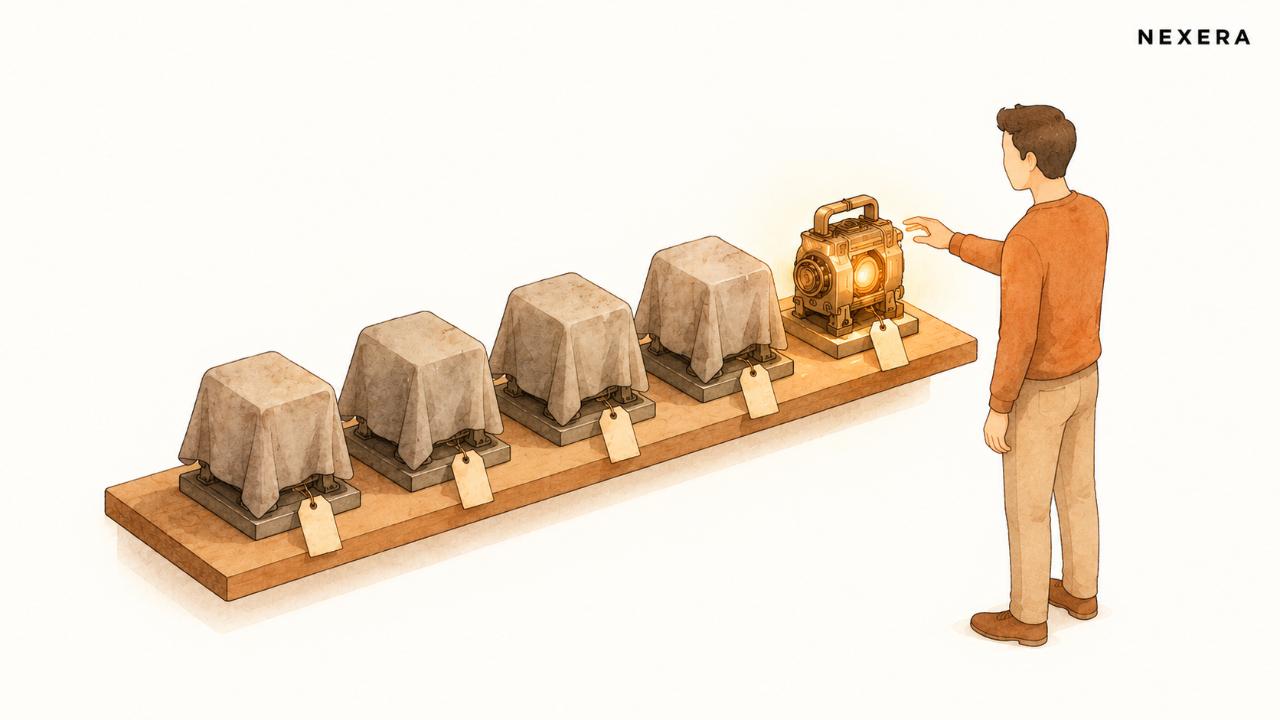
The part that catches owners off guard is that you do not have to do anything for your AI to change. There is no update button, no version you approve, no Tuesday morning where somebody rolls it out.
On February 13 of this year, OpenAI retired GPT-4o, GPT-4.1, GPT-4.1 mini, and o4-mini from ChatGPT, along with the original GPT-5 lineup. If your team had a favorite, it is gone. GPT-4o is the interesting one. OpenAI deprecated it, brought it back after enough people pushed, then retired it for good once daily usage fell to a tenth of a percent.
The same thing happens inside tools you never thought of as AI tools. On July 9, GPT-5.6 became the preferred model behind Microsoft 365 Copilot. If you pay for Microsoft 365, the engine under that button changed and you never touched a thing.
The pace is not slowing either. Since January the lineup has moved from GPT-5.2 to GPT-5.6. Last Thursday, OpenAI cut the price of its two everyday models by 80% and 20%.
The dates are already published
For anything wired into your business through an integration, this is not vague. It is a calendar.
OpenAI's deprecation page lists October 23, 2026 as the shutdown date for a long row of models: gpt-3.5-turbo, gpt-4, gpt-4-turbo, gpt-4.1-nano, o1, o3-mini, o4-mini, and the older image model, among others. Each one has a named replacement next to it. If someone built you an automation two years ago and pointed it at a name on that list, there is a real deadline sitting on your business right now and nobody sent you the memo.
Custom-trained versions are a sharper version of the same problem. When the base model underneath a fine-tuned version retires, the customized version goes with it. The tuning does not carry over. Somebody rebuilds it.
None of this is a scandal. The vendors publish it. OpenAI's own note on the February retirements promised they would always be clear about what was changing and when, and they were. The page is public and it is accurate. It is just that almost nobody running a 20-person company is reading a developer deprecation table on a Tuesday.
Newer is usually better, which is exactly what makes this quiet
I want to be careful here, because the easy version of this article is a warning, and the warning would be wrong.
These updates are mostly good. The models get cheaper, faster, and better at the work. Notion, quoted on OpenAI's own announcement page, said the new mid-tier model delivered comparable quality to the previous one at half the cost per task and in 60% less time. For a business running anything at volume, that is real money.
The trouble is not that things change. It is that they change invisibly, and "better on average" is not the same claim as "better at your specific job." A model that became more careful and more thorough is an improvement almost everywhere, and a downgrade in a quoting workflow where the customer wanted the number in the first line.
So you find out from a customer. That is the failure mode. Not a crash, not an error message. A slow drift in tone or format or detail that nobody catches, because nobody has anything to compare it against.
Five files and a calendar reminder
The fix is much smaller than the problem sounds.
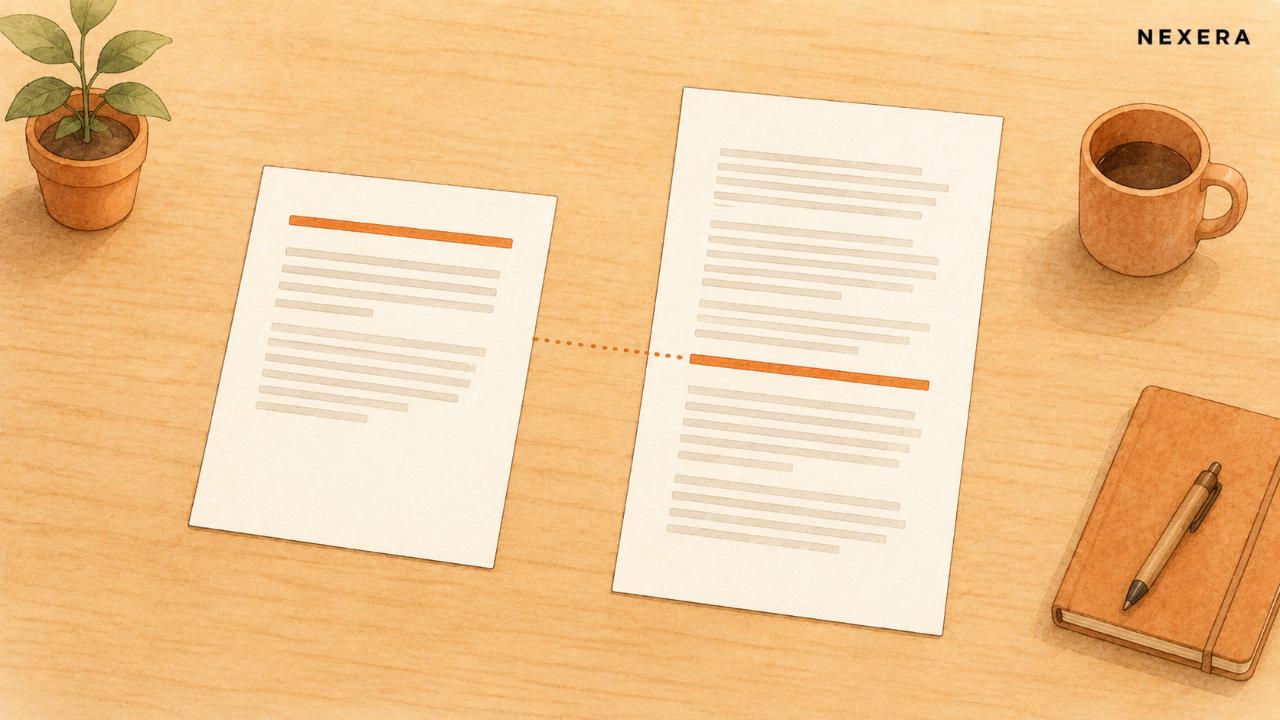
Keep five real examples. Pick five actual inputs from your business, the messy ones, and save them next to the output you already reviewed and approved. That folder is your baseline. When something feels off, or on the first Monday of the quarter, run the same five again and read them side by side. Fifteen minutes. Drift shows up immediately once you are comparing against something instead of against memory.
Write down what good looks like, inside the tool. Not in one person's head, and not in a prompt somebody retypes from scratch every time. Put the standard in the custom instructions or the project file so it survives a version change. A definition of right that lives in the tool travels with you. One that lives in a lucky prompt does not.
Know which tools are pinned. Your chat app follows whatever the vendor ships. But the automation somebody built for you, the one scoring your leads or drafting your invoices, may be nailed to a specific model name with a shutdown date attached. Ask whoever built it two questions: what model is this pointed at, and what happens when that model retires. If they cannot answer in a sentence, you have learned something.
Then put ten minutes on the calendar once a quarter to read the release notes for the two or three tools you actually depend on. That is the entire maintenance plan.

The part you control
Most owners I talk to still think about AI as a project. Pick the tool, set it up, train the team, done. That framing made sense two years ago. It does not hold now, because the thing you set up in March is not the thing running in September, and nobody is going to call and tell you.
The good news is that this is maintenance, not strategy. Five files, one habit, and a question for whoever built your automations.
The tools will keep moving, and mostly they will get better. You just want to be the one who notices before your customer does.
If you are not sure what is actually running behind the tools your team uses every day, that is worth an hour. Happy to take a look with you.
Want one of these every other week?
Field notes from active Nexera engagements. No newsletter theater, no growth-hacks. Drop a line on a 30-min consult and we will add you to the rare-send list.