
Oct 12, 2026 - 5 min read
You Built an AI Tool. Now Who Maintains It?
Small businesses aren't just buying AI anymore, they're building it. The part nobody planned for is what happens when the person who built it is out, busy, or gone.
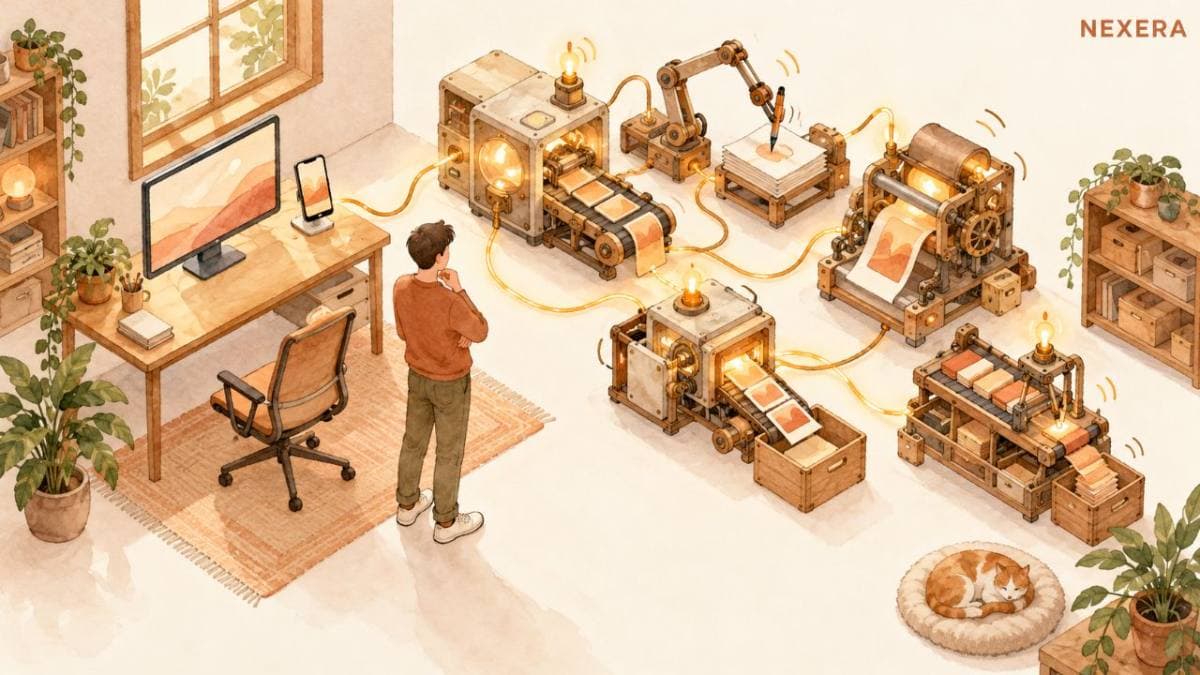
Say you run a fifteen-person HVAC company. Back in the spring your office manager got curious one afternoon and connected your AI assistant to the scheduling system. Now when a service request comes in, it drafts the confirmation, suggests a tech based on the job type, and logs the call notes. Nobody asked her to build it. Everybody uses it.
Then she goes on vacation for two weeks, the scheduling software pushes an update, and the confirmations start going out with the wrong arrival windows.
Nobody else knows how it works. Nobody knows where the instructions live. Nobody is even sure which account it runs under.
That is not a story about AI failing. It is a story about a small business that quietly became a software company and never noticed.
Small businesses stopped buying AI and started building it
A new report from Pax8, released October 12, put numbers on something I see in almost every office I walk into. They surveyed 1,150 small business leaders across the US, UK, Germany and Sweden for their Q3 2026 SMB AI Pulse Report.
67% of the businesses engaged with AI have built at least one AI solution that is now in regular use, and another 19% are prototyping. In the US that number is 81%. And these are not just saved prompts. Among the builders, 52% are developing automated workflows that connect AI to their other business systems, and 46% are building or testing AI agents that handle multi-step tasks on their own.
One caveat worth saying out loud: Pax8 sells AI and cloud tools to small businesses, so it has a stake in the story. But the direction matches what I see, and the part that matters most is not the building. It is what comes after.
The tools got easy enough that anyone in your office can build something real in an afternoon. The maintaining part did not get any easier.

The problem is not the build, it's the builder
Here is the number from that same report that should make an owner pause. In the US, only 36% of builders have a formal, documented review of what they built. Another 41% rely on review that is consistent but undocumented. Translation: somebody checks, and that somebody keeps it in their head.
That works right up until it doesn't. Undocumented review is just one person's memory with a nicer name.
The report also found that 35% of AI-engaged businesses discovered shadow AI in the past six months, meaning tools, workflows or agents nobody had approved. Most of that is not anyone being sneaky. It is a helpful person solving a real problem without telling anyone how.
And the platforms themselves are starting to make this point for you. Google announced on September 30 that Gemini "skills" will replace Gems. According to Google's transition guide, remaining Gems will be migrated into inactive draft skills, and the creator has to review and activate each one before anyone can use it again. For business accounts, Gems stop working no sooner than March 1, 2027.
Think about that detail from an owner's chair. If the person who built your team's most-used Gem has left, nobody may be able to switch it back on.

Treat what you built like equipment, not like a trick
You would never let a company truck go a year without anyone knowing who has the keys, where the maintenance log is, or what it is allowed to haul. Homemade AI deserves the same boring treatment. Here is the version I set up with clients, and none of it takes more than an afternoon.
- Make a list. One shared page with every AI tool, workflow, custom assistant or agent anyone has built. Name, what it does, who uses it. Most owners are surprised by how long the list is.
- Name an owner and a backup. Every item on the list gets two names. The backup should be able to open it, read it, and turn it off.
- Write down what it touches. Which systems it reads from, which ones it writes to, and whether it can send anything to a customer or spend any money. That one line tells you how worried to be.
- Store the instructions outside the tool. Copy the prompt, the setup steps and the account it runs under into a shared doc. If the platform changes or the account disappears, you can rebuild it.
- Put a check on the calendar. Once a month, run a real example through it and look at the result. Vendors update their software on their schedule, not yours.
- Know where the off switch is. If something starts going sideways, anyone on the owner list should be able to pause it in under five minutes.
None of this slows anyone down. It just means the clever thing your office manager built survives her vacation.

Keep building, just build like you plan to keep it
I am not telling anyone to stop. The fact that a non-technical person on your team can build something that saves the whole office an hour a day is the best thing to happen to small businesses in a long time. The Pax8 data says the businesses using AI extensively are more likely to feel ahead of their competitors, and that tracks with what I see.
But the moment something you built is part of how work gets done, it is part of your operations. It needs a name on it, a backup, and a page that explains it. The businesses that do that will keep what they built. The ones that don't will rebuild it from scratch the first time someone leaves.
If you want help making that list, or figuring out which of your homemade tools are worth keeping, that is exactly the kind of work we do at Nexera Intelligence. Happy to take a look at what you've got.
Want one of these every other week?
Field notes from active Nexera engagements. No newsletter theater, no growth-hacks. Drop a line on a 30-min consult and we will add you to the rare-send list.