
Oct 2, 2026 - 5 min read
The Approve Button Is Your New Job
AI agents can now run real pieces of your business, and the safety net is a button that says Approve. It only protects you if you still read what is behind it.

Say you run a bakery with two locations. It is 9:40 on a Tuesday night, you are finally off your feet, and your phone lights up. Your AI assistant has drafted three Instagram posts for the weekend, written a reply to a café asking about wholesale pricing, and suggested putting $60 behind the post that did well on Sunday. Each one comes with a button. Approve.
You read the first one carefully. The second one, mostly. By the fifth notification you are thumbing Approve the way you clear a phone update, and the wholesale reply goes out quoting last year's prices.
Nothing malfunctioned. The AI did its job. The approval step did not.
The tools just asked for the keys
On September 29, Meta launched Muse for Small Business, an AI agent you hand a goal to, like finding new customers, and it works toward that goal in the background. It connects in a few clicks to your Facebook and Instagram business accounts and your Meta ad account, plus tools a lot of small businesses already run on: QuickBooks, Stripe, Shopify, Klaviyo, Slack, Canva and more. Meta says it is free for most of what people need.
Meta also made a promise in the launch post, and it is the right one: nothing publishes, sends, or spends without your approval.
That is good design. An agent that posts, emails, and spends on its own with nobody watching would be reckless. Keeping a human on the final click is exactly what you want.
But notice what that promise quietly does. It moves the safety of the whole setup onto one person's attention, usually the owner's, usually at the end of a long day.
Approve is a habit, and habits get sloppy
There is a well-known security story that has nothing to do with AI and everything to do with this. In September 2022, an attacker got hold of a contractor's Uber password and kept trying to log in. Every attempt sent the contractor a login approval request. According to Uber's own security update, those requests blocked the attacker at first. Eventually the contractor accepted one, and the attacker was in.
You do not have to be careless for that to happen. You just have to be worn down. A button that shows up again and again stops being a decision and turns into a reflex.
AI agents are about to put a lot more buttons in front of small business owners. Drafts to approve, replies to approve, campaigns to approve, payments to approve. The more useful the agent gets, the more it asks. And the more it asks, the less each approval means.
The real risk here is a tired owner and a button that looks the same every time.
What changes when the agent can act
For the last few years, most small business AI was a writing partner. It drafted, you copied and pasted, and that copy and paste was your review. If the draft was off, it died in a chat window.
Agents remove the copy and paste. The draft now lives inside your actual accounts, one tap from going live. That is the whole point, and it saves real time. It also means the distance between "the AI got something wrong" and "a customer saw it" is a single thumb.
The mistakes that matter are rarely dramatic. A price that changed in March. A discount you only meant for one customer. A boost that runs a week longer than you wanted. A reply in a tone that does not sound like you. Small things, in public, with your name on them.

Keep the button meaning something
None of this is a reason to skip these tools. It is a reason to set them up so your approval stays a real decision. A few moves get you most of the way.
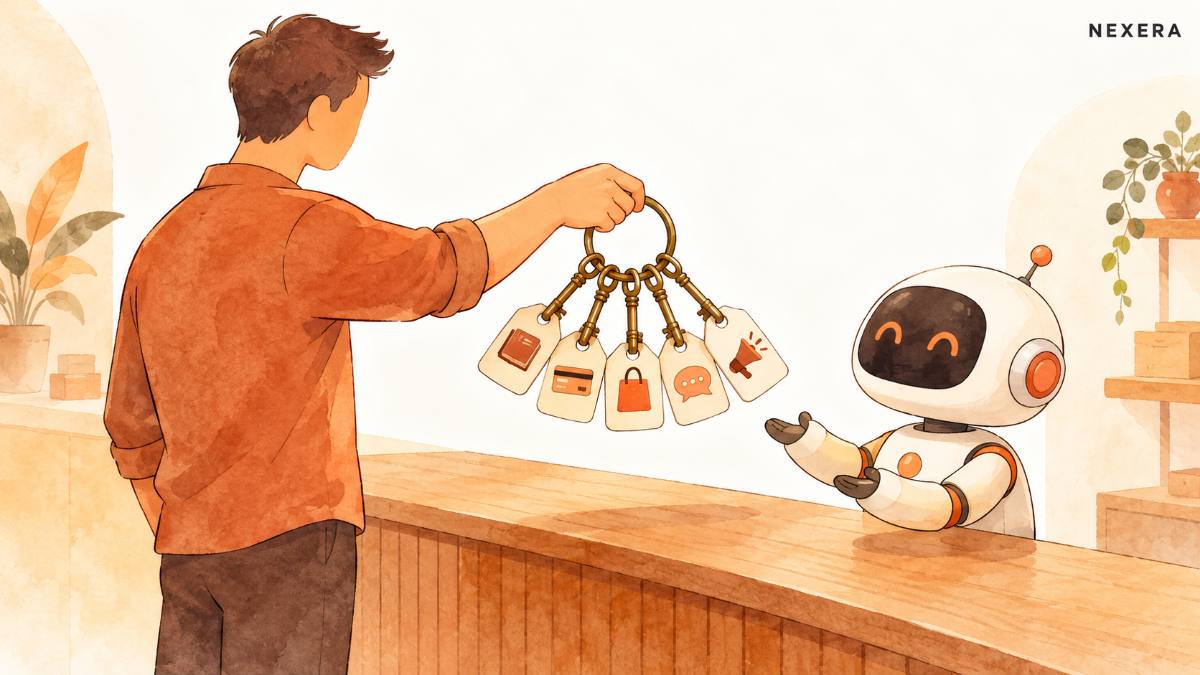
Connect one thing at a time. Start where a mistake is cheap, like drafting social posts, and live with it for a couple of weeks before you hand over the books, the payments, or the ad account. Where a tool lets you choose, give it access to read and suggest before you give it access to act.
Split approvals into two piles. Routine work, like a post draft or an internal summary, can get a quick look. Anything that touches money, a customer, or a price gets a full read, every time, no matter how good the last twenty were.
Put hard limits where your attention can fail. A spending cap set inside the ad account itself still works at 9:40 at night. Your willpower might not.
Approve on a schedule, not on a buzz. Fifteen minutes in the morning with coffee, going through what the agent queued, beats approving in bed one notification at a time. You will catch more, and you will feel less like an assistant to your assistant.
Look back once a week. What did it publish, send, or spend? Ten minutes of that tells you whether the agent has earned more room or needs less.

The agent does the work. You still own the yes.
Tools like Muse are going to give small business owners real hours back, and that is a good thing. A grocery owner in Iowa quoted in Meta's launch post said he wants his time back for cutting steaks and making sausages, the work that actually makes his store money. That is the right goal.
Just remember what the approve button is: the last place your judgment shows up before something goes out under your name. Treat it that way, especially at 9:40 at night.
If you are about to connect an AI agent to your accounts and want help deciding what it should touch first, and what it should never touch at all, that is exactly the kind of setup we help with. Come say hello at nexeraintelligence.com.
Want one of these every other week?
Field notes from active Nexera engagements. No newsletter theater, no growth-hacks. Drop a line on a 30-min consult and we will add you to the rare-send list.