
Oct 15, 2026 - 5 min read
Your Next Hire Might Not Be a Real Person
Hiring fraud moved from the resume to the interview, and the video call was never built to prove who someone is.

Forty percent of hiring managers say they have interviewed someone who turned out to be using a fake identity. Not a padded title or an inflated date range. A different person, or no real person at all.
That figure comes from a survey of 3,000 US managers that Checkr published this morning. The number worth noticing is not the forty. It is where it came from. The same question came back 31% a year ago.
Most owners hear "hiring fraud" and picture a resume with a stretched job title on it. That problem is old and mostly survivable. This is a different one. The applicant on the video call is personable, answers the questions well, has a clean work history, and is not who they say they are.
The resume was never the backstop
We have known for a while that AI writes a flawless resume. The quiet assumption was that the interview would sort it out. You get on a call, you talk to a human, you form a read.
That assumption is the thing that broke. In the same survey, 60% of managers said AI has made virtual interviews harder to trust, up from 51% last year. Sixty-eight percent said candidates are now better at faking their identities with AI than employers are at catching it. Only 23% described themselves as extremely confident their hiring process would catch a fraudulent candidate, and 38% think someone fraudulent is already working at their company right now.
Worth saying plainly: Checkr sells background checks, so the framing serves them. The survey ran September 11 to 16 and polled US adults who manage people and had hired in the past year. It is self-reported, and the release does not name the platform that fielded it. Take the exact percentages as a signal rather than a measurement. The direction is the part that is hard to argue with, because last year's edition of the same survey is public and the numbers moved the same way across every question.
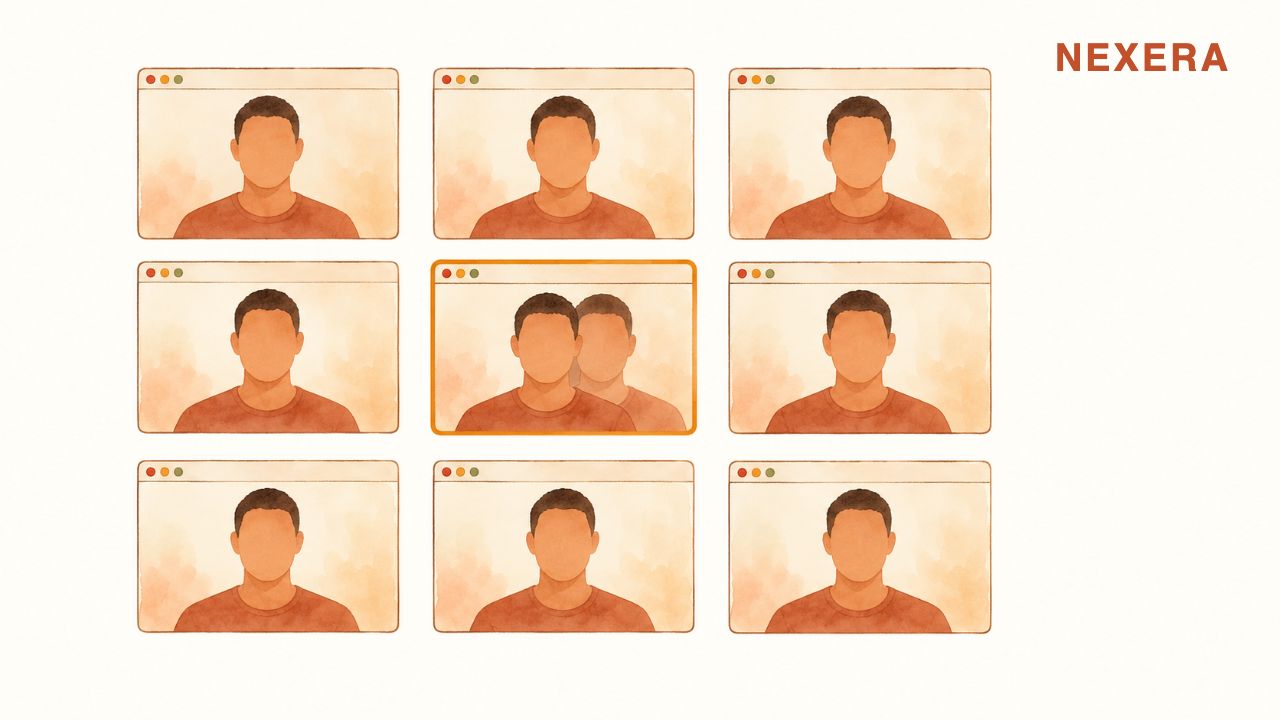
Small companies are the soft target here
A thousand-person company runs identity verification software and has someone whose job is to notice. A fifteen-person firm hiring its first remote bookkeeper has a process that is two video calls and an owner's gut.
And the roles being targeted are exactly the ones small businesses hire remotely: bookkeeping, scheduling, marketing coordination, drafting, IT support, anything a good person can do from anywhere. Hiring remotely is one of the genuinely useful things that opened up for small businesses in the last few years. It also removed the one check nobody ever had to think about, which was that the person showed up at your office on Monday.
The FBI has a standing public warning that describes the mechanics. Its July 2025 advisory on North Korean IT workers lays out a specific operation, not every fake applicant, but the playbook is instructive. US-based facilitators receive the company laptop so the worker appears to be in the country, provide the internet connection, open the bank and job-site accounts, and in some cases attend the virtual interview on the worker's behalf. The person you hired and the person doing the work are not always the same person.
What the FBI actually tells employers to do
The advisory is unusually practical, and most of it costs nothing:
Compare the photo, phone number, email and address on the ID against social profiles and payment accounts, and look for misspellings. Verify employment and education directly with the school and the former employer. Ship company equipment only to the address on the employee's ID, and ask for more documentation if someone requests a different one. Hold off on system access until background checks are finished. On video, ask for an unobscured background, ask the candidate to show the room through the camera, and ask them to wave a hand in front of their face, which can disrupt AI-generated video.
That last one sounds absurd right up until the first time it works.

Five things worth doing before your next remote hire starts
Put one unscripted minute in every interview. Ask about something only the real person would know from their own stated history. The town the old office was in. What the busy season looked like there. Specific beats clever.
Check identity against a document you already need. You are doing an I-9 regardless. Do it live on camera before the offer goes out rather than in the rush of day one.
Call one reference at a number you looked up yourself. Not the number printed on the resume, and not the email address the candidate forwarded.
Ship the laptop only to the address on the ID. If someone asks you to send it somewhere else, that is a conversation worth having, not a shipping preference to accommodate.
Keep looking after the start date. In the survey, 63% of organizations aim their fraud prevention at the pre-hire stage and 6% at anything after it. The address change in week three and the work that quietly changes quality are both things nobody is assigned to notice.

This is not about treating people like suspects
Almost everyone who applies to work for you is exactly who they say they are, and a hiring process built around catching the rare fraud will cost you good candidates faster than the fraud ever would. Nobody needs a tribunal for a part-time bookkeeper.
The narrower point is that the interview stopped being proof of anything. It was never designed as an identity check. For most of the history of hiring it did not have to be, because the person eventually walked through a door. Now, for a lot of roles, they do not, and the five minutes it takes to confirm a human is who they claim to be is the cheapest insurance in the whole process.
If you are hiring remotely for the first time and want another set of eyes on how you screen, that is the kind of thing we work through with owners at nexeraintelligence.com.
Want one of these every other week?
Field notes from active Nexera engagements. No newsletter theater, no growth-hacks. Drop a line on a 30-min consult and we will add you to the rare-send list.