
Nov 3, 2026 - 6 min read
Your AI Is Reading Your Messiest Files
AI answers from whatever files you give it. If you have three price lists, it will find the wrong one. Here is the one-weekend cleanup that fixes it.
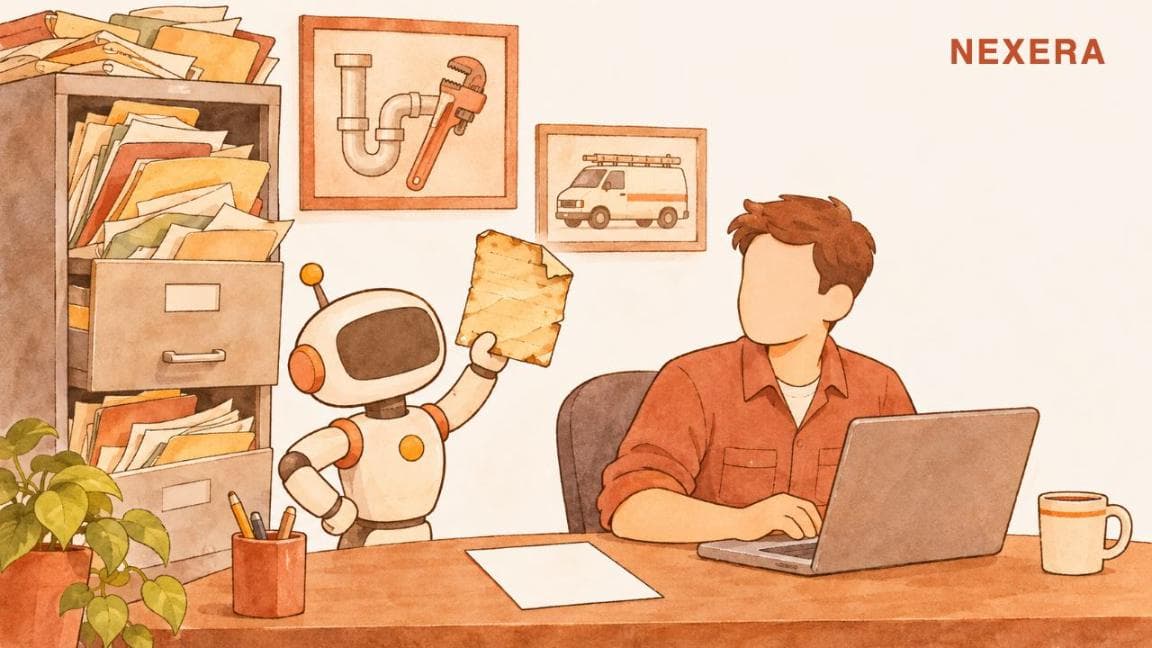
Picture a plumbing company with nine trucks. The owner finally connects an AI assistant to the shared drive so the office can answer quote requests faster. First week, a homeowner asks what a water heater swap costs. The assistant answers in about four seconds, friendly and confident, with a number $400 below what the company actually charges.
Nobody made a mistake, exactly. The assistant found a file called "Pricing 2023 FINAL v2" and read it. The current price sheet lives in a different folder under a different name. There is also a third version in the office manager's email that nobody remembers sending.
The AI did not make anything up. It read your files. That was the problem.
The AI Did Exactly What You Asked
Most owners worry about AI inventing answers. That happens, but at a small business the more common failure is quieter. The AI answers correctly from the wrong source.
Every business that has been around more than a few years has layers. Old price lists. Policies that changed but were never deleted. Customer records entered twice with two different phone numbers. A procedure doc written by someone who left in 2022.
A person on your team knows which version to trust. They know the 2023 file is dead and the real prices are in the one Maria updates. The AI does not know any of that. It sees four files that all look official and picks one.
Your team filters out the junk without thinking about it. The AI can't.
The Big Companies Are Stuck Here Too
This is not a small business problem. It is an everybody problem, and the numbers from the last few weeks make that clear.
Dun & Bradstreet's latest AI Momentum survey, released October 28 and covering 10,000 businesses in 32 countries, found that only 8% say their data is fully ready for AI. The gap that follows is the part worth noticing. Among the fully ready companies, 81% reported broad or strong returns from AI. Among companies whose data was only partially ready, it was 12%.
Same models. Same tools. Wildly different results, and the difference was the files underneath.
Meanwhile 65% of those companies plan to spend more on AI next year, while the share seeing real returns stayed flat at 28%. A lot of businesses are buying a faster engine and putting it on the same bumpy road.
A separate survey from Komprise, a data management company, asked 500 technical leaders in September what their biggest gaps were. Nearly half named two things: finding the right data for a project, and cleaning up what they called ROT, meaning redundant, obsolete, or trivial data. Both surveys come from companies that sell data services, so take the framing with that in mind. But the pattern lines up with what shows up in small offices all the time.
If a company with a full IT department can't find the right file, your shared drive is not going to sort itself out.
What Messy Looks Like in a Small Business
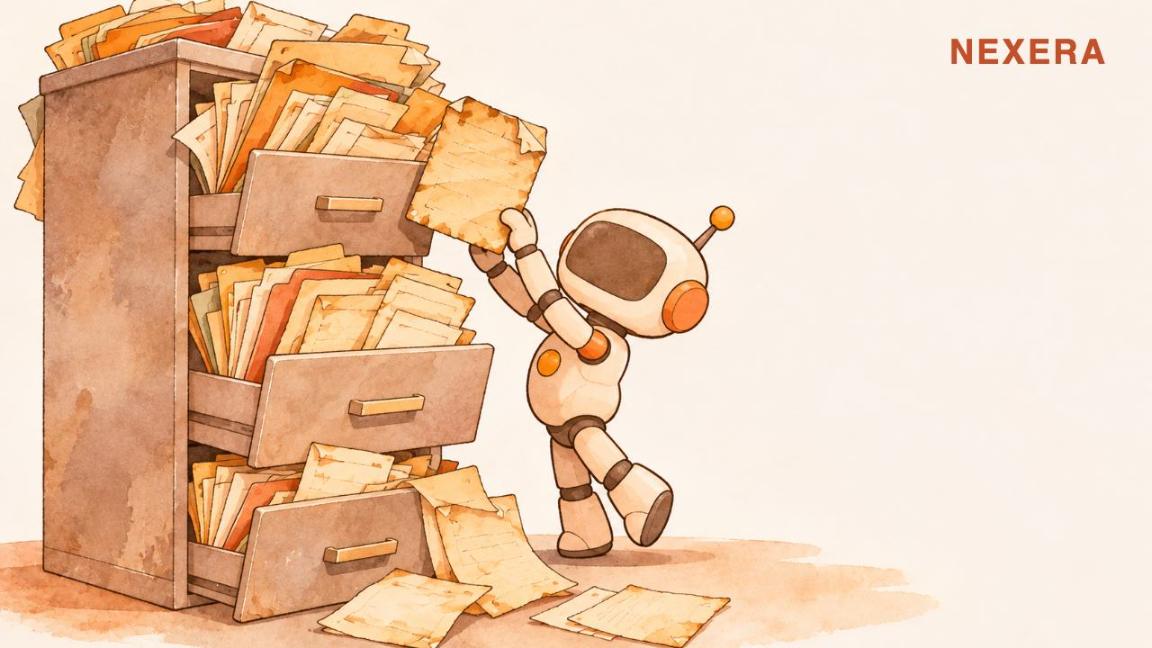
You do not need a data warehouse to have a data problem. At a 10 or 20 person company it usually looks like this:
- Three price lists, and only one is current
- The same customer in the CRM twice, with different addresses
- A returns policy on the website that does not match the one in the employee handbook
- Last spring's promotion still sitting in a "Marketing" folder with no end date on it
- Procedure docs named "NEW," "NEW NEW," and "use this one"
- Key details that only live in one person's phone or inbox
None of this mattered much when people were the only ones reading it. People ask. People remember. People notice a date from three years ago.
Once AI starts reading those files to answer customers, draft quotes, or summarize accounts, every stale document becomes a possible answer. The mess stops being an annoyance and starts talking to your customers.

A One-Weekend Cleanup
You do not need to fix everything. You need to fix what the AI will actually read. Here is the version that works for most small teams.
- List the five questions the AI will answer most. Pricing, hours, service area, policies, and whatever your customers ask about constantly. Start there, not with the whole drive.
- Find every file that answers each one. Search your drive, your email, your website. You will probably find more versions than you expected. That count is the size of your problem.
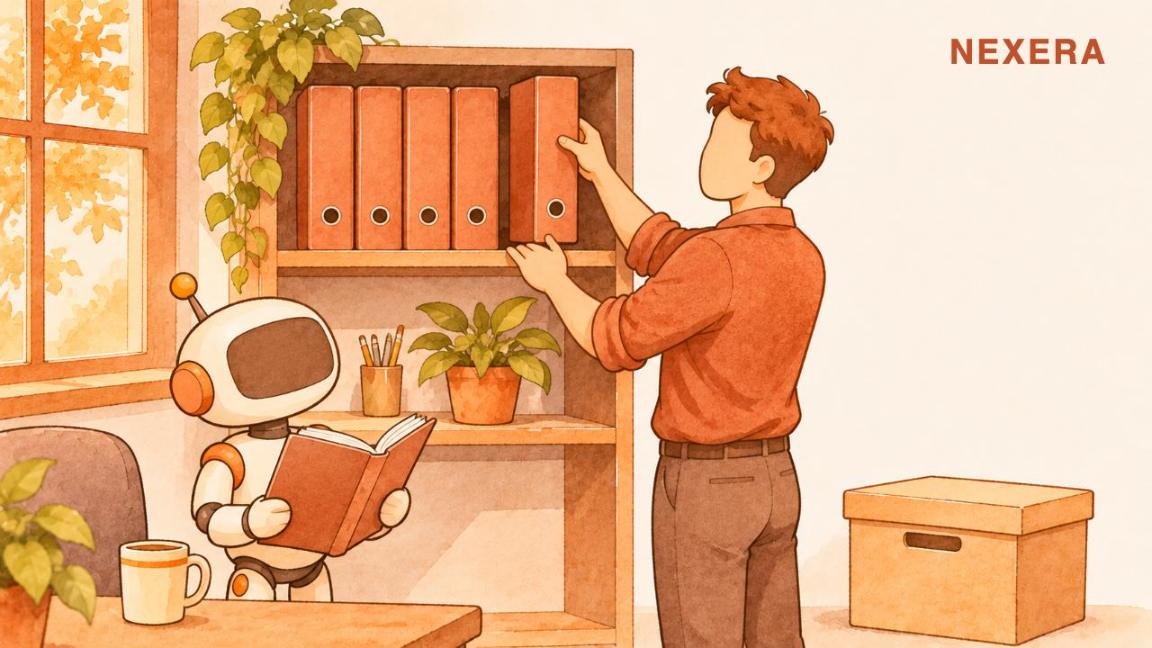
- Keep one and move the rest out of reach. Do not delete them if that makes you nervous. Put them in an archive folder the AI is not connected to. What matters is that the assistant can only see one answer.
- Put a date and an owner at the top of every file you keep. "Updated November 2026, owned by Maria." Now everyone, including the AI, can tell what is current, and someone is responsible when it changes.
- Set a 20-minute monthly check. When a price changes, the old file goes to the archive the same day. Put it on the calendar so it does not depend on someone remembering.
That is it. A Saturday for the first pass, 20 minutes a month after that. It is not exciting work. It is the work that decides whether the AI you are paying for gives good answers or confident wrong ones.
Clean Beats Clever
Most of the conversation about AI is about which model is smartest. For a small business that is rarely the bottleneck anymore. The tools are good enough. What they are reading usually isn't.
The owner who spends one weekend cleaning up five files will get better answers from a basic AI assistant than the owner who buys the most expensive tool and points it at a decade of "FINAL v2."
Back to the plumbing company. The fix took one afternoon. The old price lists went into an archive folder, the current one got a date at the top, and the assistant has quoted correctly ever since. The AI didn't get any smarter. The files got cleaner.
If you want help figuring out which files your AI should read and which ones it should never see, that is exactly the kind of work we do at Nexera Intelligence. Happy to take a look at your setup.
Want one of these every other week?
Field notes from active Nexera engagements. No newsletter theater, no growth-hacks. Drop a line on a 30-min consult and we will add you to the rare-send list.