Sep 22, 2026 - 6 min read
Who Let the AI Record Your Client Call?
The friendly bot taking notes in your meetings is a recording device, and recording law is starting to catch up. Here is how to keep the convenience without inheriting a lawsuit.
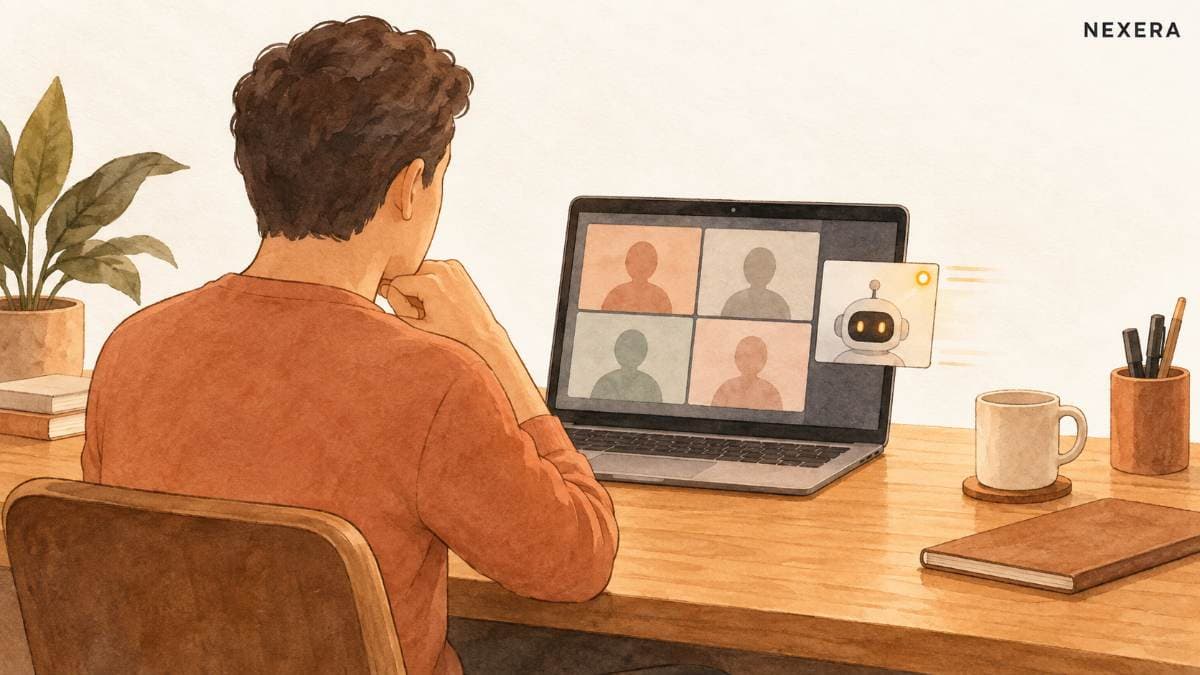
Last month a client texted me from a Zoom he was still sitting in. A new attendee had just slid into the call, something like "Dana's Notetaker," and it was not his. It belonged to the person on the other side of the deal. It sat there with a little record dot, quietly transcribing every word, and nobody had said a thing about it. His question was short: is that even allowed?
Fair question. Most owners I work with have stopped noticing these bots at all. They show up in sales calls, client reviews, partner negotiations, interviews. Someone connected a calendar to a notetaker once, and now the notetaker joins everything on its own. It feels like a convenience. It is also, in plain legal terms, a recording device that nobody in the room agreed to switch on.
The bot is not the problem. The recording is.
The tools themselves are useful. I use one. The transcript, the summary, the action items that used to live in a notebook and never got typed up, that is real friction removed. I am not telling you to rip them out.
The trouble is what they are underneath the friendly name. A notetaker joins your meeting, captures the audio, and ships it somewhere to be processed. Some of them keep that audio to train their own models. And in most cases the bot arrives without a single person on the call being asked, "is it okay if we record this?" It just appears.
That gap, recording without asking, is exactly what recording law was written to catch.

A courtroom is about to test this
This is not hypothetical anymore. A man named Justin Brewer sued Otter.ai in August 2025, and three more suits like it followed within weeks. They were consolidated in a federal court in Northern California, and a judge is set to hear Otter's motion to dismiss on May 20, 2026. One industry outlet called it the first federal test of whether decades-old wiretap statutes reach an AI bot sitting quietly in the corner of a video call.
The complaint says Otter's notetaker recorded private conversations without the consent of everyone on the call, and it points at the federal wiretap law, the California Invasion of Privacy Act, and others. It also flags something worth reading twice. The vendor's own terms tell you, the customer, to make sure you have the necessary permissions. Translated, that means the legal exposure was handed to you the moment you connected your calendar.
Otter is not alone in the spotlight. Fireflies got hit with biometric privacy claims in December. A few universities have banned Read AI from their systems outright. This is shaping up to be a wave, not a one-off, and the small business caught in the middle of it is not the vendor. It is you.
Why "we are in New York, we are fine" is the wrong read
Here is the part that trips people up. New York and New Jersey are one-party consent states. If you are on the call, your consent covers the recording, and for a purely local conversation you are usually in the clear.
But your calls are not purely local. The moment the person on the other end is sitting in California, Florida, Pennsylvania, Washington, or one of the roughly dozen states that require everyone to agree, the stricter rule can come into play. Courts have applied the tougher state's law when one party was somewhere that demanded all-party consent. You do not always know where your prospect is dialing in from. The bot does not ask. And the penalty is not a slap on the wrist. Statutory damages under the federal wiretap law have been reported as high as $10,000 per violation, and that is before the state claims stack on top.
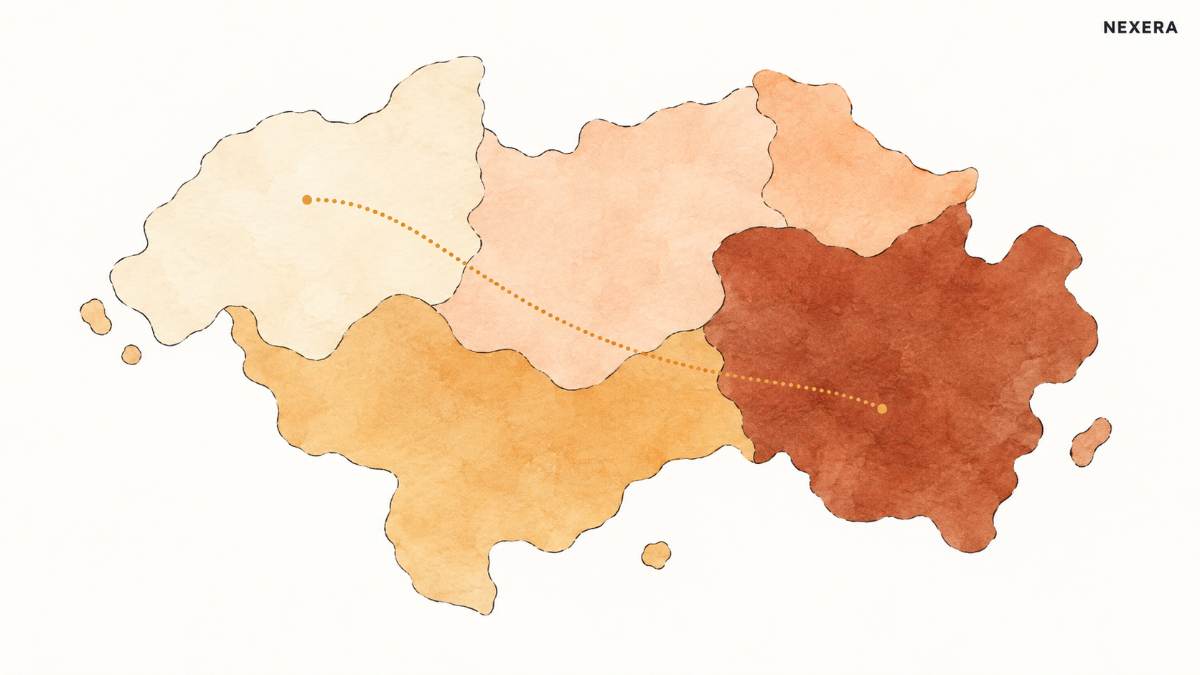
So the real risk is not that you did something shady. It is that a tool you set up once, for convenience, is now recording people in places with rules you never looked at.
What to actually do before your next call
None of this means kill the notetaker. It means run it the way a grown-up runs a recording device. A few moves cover most of the risk, and none of them are hard.
Say it out loud. At the top of the call, before the bot has anything worth keeping: "I have a notetaker running to catch action items, any objection?" Ten seconds. It turns a silent recording into a consented one, and it is the single most protective thing you can do.
Turn off auto-join. Stop the notetaker from crashing every meeting on your calendar by default. Let the host add it on purpose, one meeting at a time. Convenience is not worth having a bot in a sensitive negotiation that nobody meant to record.
Read the vendor's data terms once. Specifically, whether your audio is used to train their models, how long it is kept, and whether you can turn that off. If a client's confidential information is in that audio, this matters more than the monthly price.
Write down one rule for your team. A single line, notetakers are announced and only used with consent, beats a policy nobody has. Most companies have zero policy here, which is how you end up with fifteen transcripts of client calls sitting in an app nobody is watching.
And when the conversation is genuinely sensitive, legal, personnel, a deal mid-flight, just take notes by hand. Not everything needs a transcript. I am not a lawyer, and where real money or real confidentiality is on the line, your attorney is the person to ask. But most of this is common sense you can put in place this week.

The tool was never the risk
The notetaker did not do anything wrong. It did exactly what you set it up to do. The gap is that we started treating an always-on recording device like a harmless little assistant, and the law is now catching up to remind us it is not.
You do not need to be afraid of these tools. You need to run them on purpose, announced, scoped, and with a rule everyone knows. Do that, and you keep the part that actually helps without inheriting a problem you never saw coming.
If you are not sure how your team is using these tools, or you want a simple policy that fits the way you actually work, that is the kind of thing we sort out with clients every week. Come say hello at nexeraintelligence.com.
Want one of these every other week?
Field notes from active Nexera engagements. No newsletter theater, no growth-hacks. Drop a line on a 30-min consult and we will add you to the rare-send list.