
Jul 28, 2026 - 6 min read
Nobody Wants to Hear It's AI. Say It Anyway.
Disclosure rules land August 2, and the research says telling customers it's AI costs you trust. Being caught costs more.
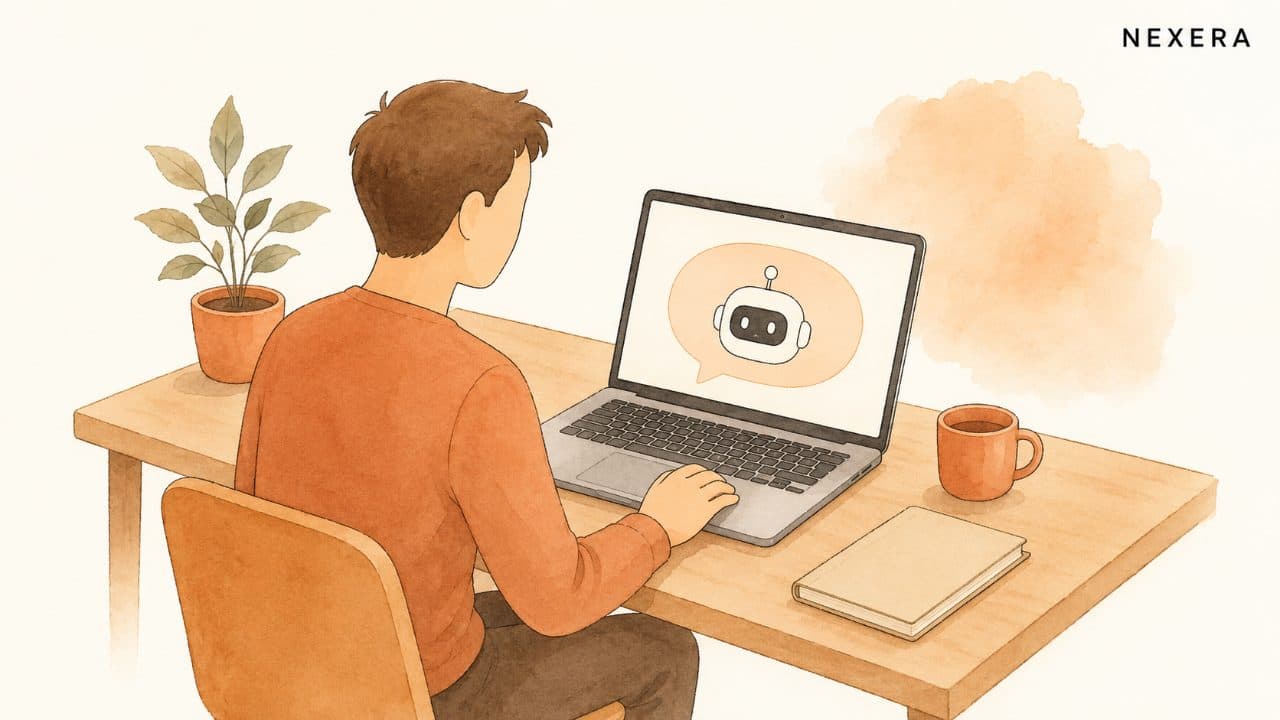
A client called me last month about the chat widget on his site. It was working. Booking consultations, answering questions at 11pm, doing what he bought it for. He wanted one change: could I make it stop saying it was a bot?
He wasn't trying to trick anyone. He had watched his own numbers and decided the disclosure line was scaring people off.
I told him I understood the instinct, and that we were going to do the opposite.
The deadline nobody put on your calendar
On August 2, Article 50 of the EU AI Act starts to apply.
The rule for anything that talks to a person is short. People have to be told they are interacting with an AI, from the start of the first interaction, in a way that is clear and easy to notice. There is an exception when it is obvious, and the European Commission has said that exception should be read narrowly, because it takes transparency away from people.
Two details matter for a US business. The rule reaches past Europe: a provider outside the EU is still covered if the output of their AI system is used there. And the penalties are real, up to 15 million euros or 3% of worldwide turnover, though the Commission says proportionality can be taken into account for smaller companies.
One thing worth being clear about, because the scary number invites confusion. This particular duty lands on the provider, meaning whoever built and shipped the system. If you bought a chat widget off the shelf, that is usually your vendor rather than you. Ask them where they stand on it.
If you have no European customers, skip it. Do not skip what comes next.
Your own state may have gotten there first
Most owners I talk to assume AI disclosure is a European problem. It is not.
Sell merchandise or real estate in New Jersey with a bot doing the talking, and state law already requires you to disclose that clearly and at the start of the interaction. New York's "synthetic performer" law, the first of its kind in the country, took effect in June and requires advertisers to disclose AI-generated performers in visual ads. Maine covers any bot used in trade or commerce that might mislead someone into thinking it is a person, and a plaintiff there does not have to prove anyone was actually fooled or harmed. California and Utah have their own versions, each drawn a little differently.
Underneath all of it sits the FTC Act, which has been in force the whole time. If a chatbot's presence is unexpected and would matter to a customer's decision, hiding it is a deception problem with or without an AI law on the books.
The lawyers at DLA Piper, reviewing this patchwork in January, landed on a simple recommendation: err on the side of transparency.
Now the uncomfortable part.
The research says disclosure costs you
My client's instinct was right.
Two researchers at the University of Arizona, Oliver Schilke and Martin Reimann, ran thirteen experiments on the cost of admitting it, published in Organizational Behavior and Human Decision Processes. Across different tasks and different roles, the finding held: people who disclosed using AI were trusted less than people who did not.
It is not mainly a verdict on the work itself. Trust dropped because the AI use read as less legitimate. And the penalty showed up whether disclosure was voluntary or required, whether the audience already knew AI was involved, and no matter how the disclosure was worded.
Worth being precise about what they tested: people disclosing that they used AI on a task, which sits next to a bot introducing itself rather than being the same thing. The direction is still hard to wave off.
So transparency has a price. Anyone telling you customers will reward you for the honesty is selling something.

It still beats the alternative
The same paper has the finding that matters most here. In the study that tested both, disclosing it yourself cost less trust than having someone else expose it, and the gap was not small.
That reframes the decision. You are not choosing between a cost and no cost. You are choosing which cost to pay, and one of them is cheaper and arrives on your schedule. The authors are careful to note there are probably situations where disclosing costs more, and they would like to know which ones. Fair enough. But if you are weighing whether to stay quiet, that is the trade you are actually making.
Picture the version where you say nothing. A customer spends nine minutes explaining a problem to something they believe is a person. Then they work it out. The complaint is no longer that you used AI. It is that you let them keep talking. People forgive a clumsy bot. They do not forgive being handled.
What disclosure actually looks like
The practical version is small.
Say it first and say it once. One plain line at the top of the conversation. "You're chatting with an automated assistant." Not buried in a tooltip, not in the footer, not four exchanges in.
Do not perform humanity. Skip the fake typing delay, the invented first name, the "let me check with my team." Each one is a small promise you will have to break.
Give people a door. The best thing you can put next to a disclosure is an obvious way to reach a human. The disclosure costs you a little trust, and the way out buys most of it back, because the real worry behind "am I talking to a bot" is usually "am I going to be stuck here."
Then be honest with yourself about where a bot belongs. Booking appointments and answering questions about hours and pricing is a good fit. A billing dispute or an angry customer is where the disclosure and a fast handoff stop being polite and start being necessary.

The part most competitors will get wrong
Most businesses will treat this as paperwork. A line of gray six-point type near the bottom, box checked, on to the next thing.
That misses what a disclosure is. It is not a warning label. It is the first thing a customer learns about how you behave when no one is checking. You are telling them, at the least convenient moment available, what you actually are.
My client added the line. We put a "talk to a person" button right next to it. His booking numbers held.
Sometimes disclosure does cost you a conversion. But you were never going to keep the trust of someone you had to mislead to get it.
If you have AI anywhere a customer can reach it and you are not sure which side of this you are on, that is worth an hour. You can find me at nexeraintelligence.com.
Want one of these every other week?
Field notes from active Nexera engagements. No newsletter theater, no growth-hacks. Drop a line on a 30-min consult and we will add you to the rare-send list.