
Jul 7, 2026 - 5 min read
Every Resume Looks Perfect Now
You'll open your next job post to 200 flawless resumes, and not one of them will tell you much. Here is how a small business hires through the flood.
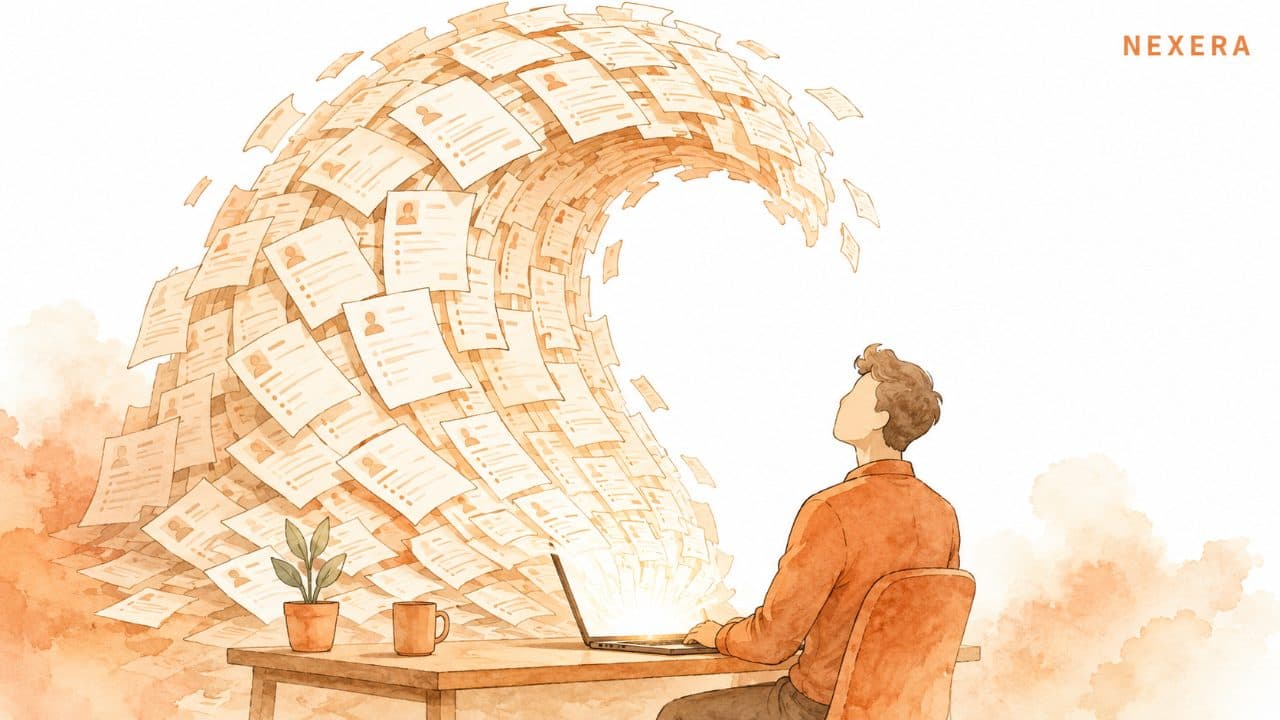
You post one job. A part-time role, nothing fancy. You go to bed, and by the time you have your coffee the next morning there are two hundred applications sitting in your inbox. You open the first one. Sharp. The second one. Also sharp. The fifth, the twentieth, the hundredth. Every single resume is clean, tailored, and says exactly what you wanted to hear.
That used to be a good problem. Now it is just a problem.
The resume stopped telling you anything
For most of hiring history, a strong resume was a small signal of effort. Someone cared enough to tailor it, spell things right, and match your posting. That signal is mostly gone. When every applicant has a free AI writing their cover letter and reshaping their resume for each listing, polish stops meaning anything. The person who spent thirty seconds looks identical to the one who spent three hours.
The scale is hard to picture. LinkedIn has said it now sees more than eleven thousand job applications submitted every single minute. A single local job post can pull hundreds of responses in a day, and a real share of them were written, formatted, and fired off by a bot the candidate pointed at a hundred listings at once.
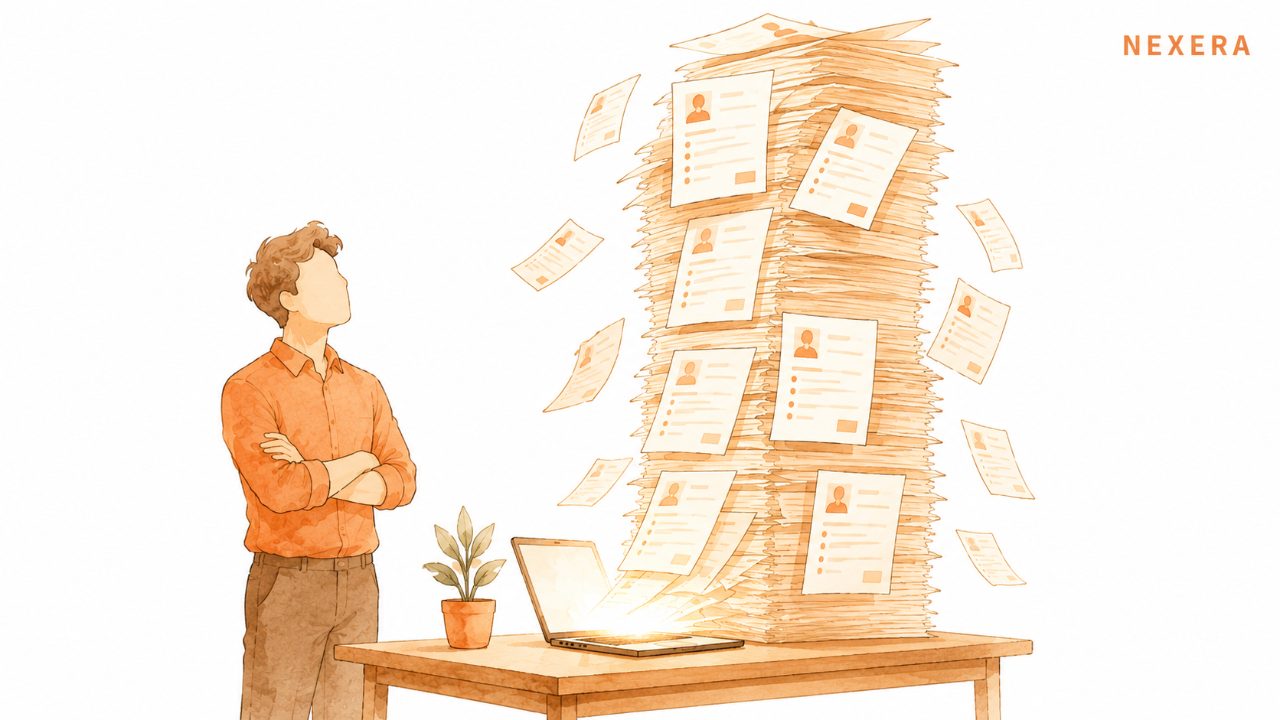
So the pile got taller and flatter at the same time. More applications, less information in each one. The dental office hiring one front-desk person and the HVAC shop hiring one tech are both staring at the same wall.
You cannot out-read a machine
The instinct is to power through it. Block off a Saturday, open all two hundred, read carefully. I understand the instinct. It is also a losing game. By resume ninety your eyes glaze over, and you start rejecting good people for typos that were never there and leaning on gut for reasons you could not defend later.
Except candidates already brought AI to this fight. You are allowed to bring it too.
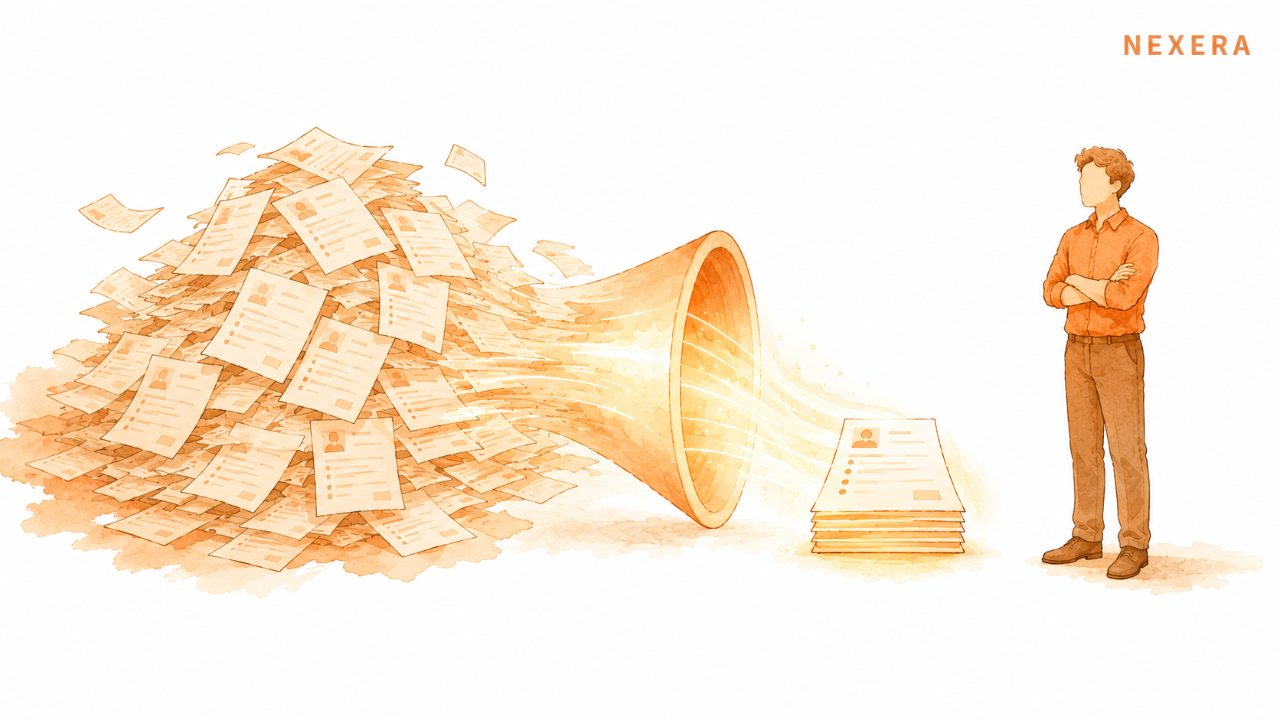
The same kind of tool that flooded your inbox is very good at the boring half of hiring. Point AI at the pile and it will read all two hundred in the time it takes you to read three. It can clear the true non-starters, the ones with no license where a license is legally required or no availability for the shift you actually posted. It can pull the fifteen that fit what you asked for. It can even line up the phone screens on your calendar without you touching a scheduling link.
That is not handing hiring to a robot. That is refusing to spend your one Saturday doing what software finishes in four minutes.
What AI still cannot fake
Now for the line you do not cross.
AI is great at getting you from two hundred names down to fifteen. It is bad, and quietly dangerous, at telling you which of the fifteen to hire. It cannot feel whether someone will own a problem at 4:55 on a Friday. It cannot hear the difference between a person who actually did the work and a person who wrote a lovely paragraph about doing the work. It has no idea whether this human will click with the three people already standing behind your counter.
There is a real trust gap underneath all this. In a 2026 Greenhouse report, seventy percent of hiring managers said AI helps them make faster and better decisions. Only eight percent of job seekers called AI hiring fair. Your future employee is walking in already braced to be judged by a machine. The businesses that land the good people are the ones who prove, early, that a real person is paying attention.
So use the machine to reach the shortlist. Then close the laptop and do the human part on purpose. A fifteen minute conversation. A small, real task that looks like the actual job. A reference call where you ask one honest question and then stay quiet long enough to hear the answer. None of that scales, and that is exactly why it works.
Where a small business should draw the line
If you are hiring this year, a simple split holds up.
Let AI own volume and logistics. Reading the pile, catching the clear non-fits, answering the "did you get my application" emails, booking the calls. This is the work that turned hiring into a second job, and it is the work AI does without complaint or overtime.
Keep the judgment human, and keep it honest. Never let a tool auto-reject people in the dark based on rules you have not read yourself. Tell candidates a real person is reviewing them, because it should be true and because they have every reason to doubt it. Make the final call the old way, in a conversation, with your own eyes.
The resume told you less this year than it did last year. It will tell you even less next year. That is not a crisis. It just pushes the real work back to where it always belonged, which is talking to actual people instead of grading their paperwork.

The businesses that get hiring right in this market are not the ones with the fanciest screening software. They are the ones who let the software clear the noise and then spend the hours they save on the fifteen minutes that decide everything.
If you are staring at a pile like that right now and not sure where the line should go, that is the kind of thing we help small businesses figure out at nexeraintelligence.com.
Want one of these every other week?
Field notes from active Nexera engagements. No newsletter theater, no growth-hacks. Drop a line on a 30-min consult and we will add you to the rare-send list.