Jun 30, 2026 - 5 min read
The Data Your Team Quietly Feeds AI
Every day your team pastes customer lists, contracts, and numbers into AI tools to save an hour. Most of it lands somewhere you don't control. The fix takes an afternoon.
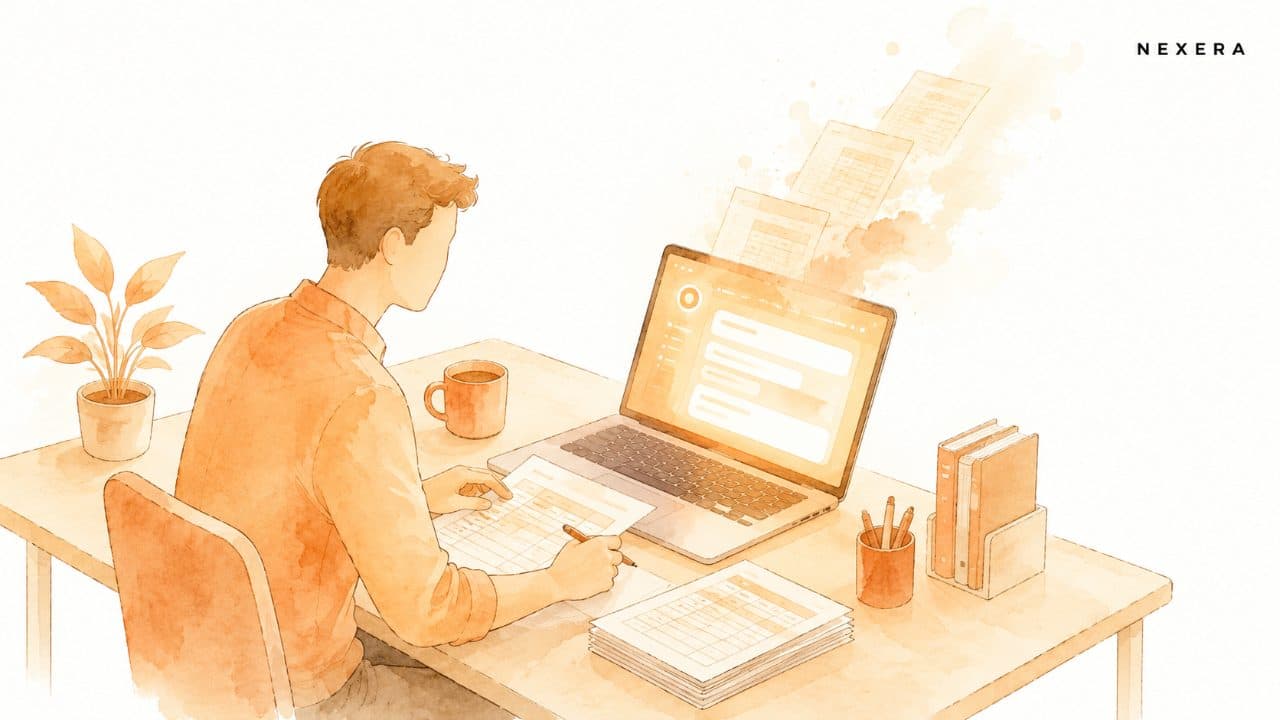
Picture your bookkeeper on a Tuesday afternoon. She has ninety invoices to reconcile and forty minutes before her next thing. So she opens ChatGPT on her own account, pastes in the whole customer spreadsheet - names, amounts owed, contact details - and asks it to flag the mismatches. It works. She saves the hour. Nobody ever finds out.
That last part is the problem.
We spend a lot of energy worrying about AI getting things wrong. The bigger risk in most small businesses is the moment it goes exactly right, on data that just quietly left the building.
The risk isn't the AI. It's the copy-paste.
Ask an owner what scares them about AI and you'll hear some version of "what if it's wrong." Fair. But wrong answers get caught. A quote that's off by a zero, an email with the wrong tone - someone notices, someone fixes it.
What doesn't get caught is the paste. Your team is already doing it, more than you'd guess. A 2025 report from the security firm LayerX found that 77% of employees paste company data into AI tools, and 82% of that happens through personal accounts with no oversight at all. Their conclusion was blunt: generative AI is now the single most common way corporate data walks out to a place the company can't see.
And it got easier this year, not harder. The AI box used to live on a separate website you had to go visit. Now it's a button sitting inside the tools your team already has open all day - the inbox, the spreadsheet, the accounting software. The little speed bump that used to make someone pause is gone. Pasting sensitive data has quietly turned into a reflex instead of a decision.
None of these people are trying to do anything wrong. They're trying to go home on time.
Where does it actually go?
Here's the part nobody explains to the person doing the pasting.
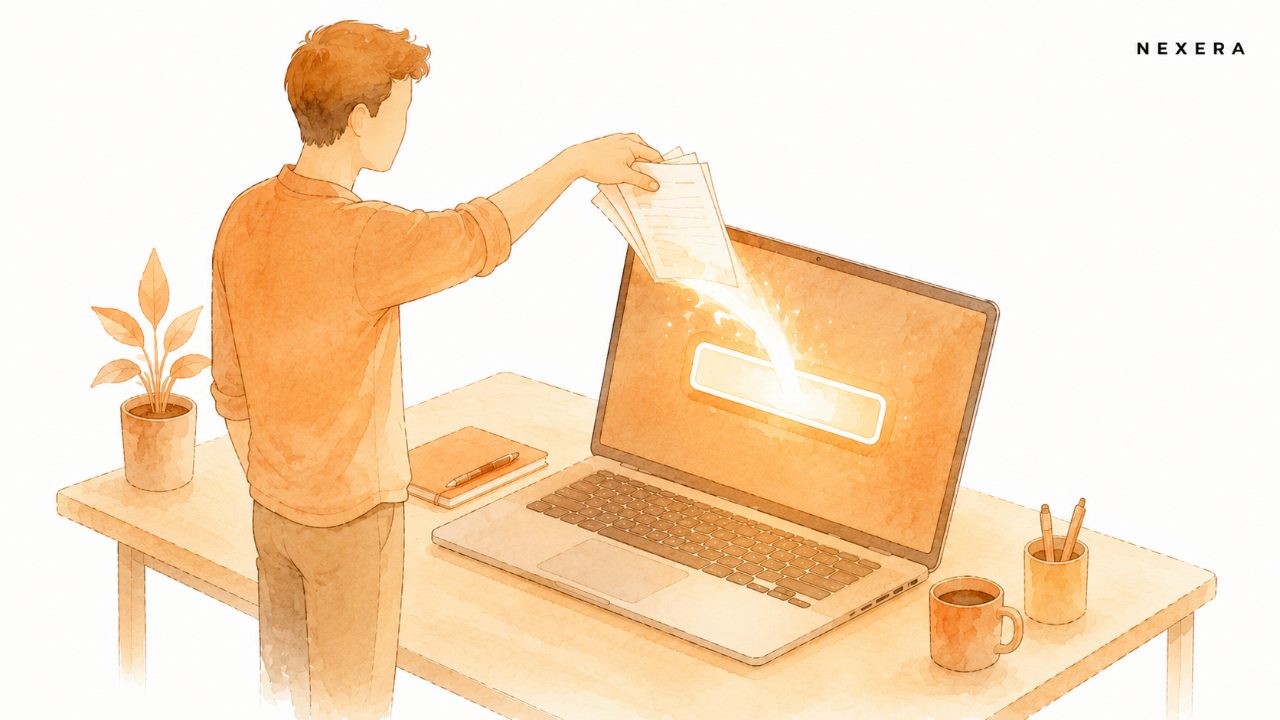
When you drop text into a free, personal AI account, you've handed a copy to a system you don't control, under terms nobody on your team has read. Depending on the tool and its settings, that text can be stored, logged, and in some cases used to help train the next version of the model. It does not come back with a receipt.
Now think about what actually gets pasted in a small business. Client lists. A signed contract someone wanted summarized in plain English. Payroll numbers. A patient note. The pricing you would never show a competitor. This isn't abstract "data." It's the exact stuff you'd never email to a stranger, moving to a stranger's server one convenient paste at a time.
And you can't un-paste it.
Banning it just moves it into the dark.
The gut reaction is to lock the whole thing down. No AI, company policy, end of discussion.
That feels safe, and it isn't. A ban doesn't stop the bookkeeper with ninety invoices. It just moves her onto her phone, on her own account, where you have even less visibility than you had before. This is the same shadow-AI trap that catches every company that leads with "no." The tools are too useful and too available for a memo to win.
The goal was never zero AI. It's AI you can actually see.

The fix is boring, and it's cheap.
You don't need a security team or a six-month project. You need three things, and you can have all three by the end of the week.
First, give people a sanctioned place to work. The business and team tiers of the major AI tools are built so your data stays yours and isn't fed back into the model. Same tool your people already like, different plumbing underneath. When the approved option is right there and just as easy, the personal-account workaround mostly disappears on its own.
Second, write the one-page list. Green light: public information, generic drafts, brainstorming, anything already sitting on your website. Red light: customer and employee personal details, contracts, financials, passwords, anything you'd protect if a competitor asked for it. One page, plain language, posted where people can see it. Not a legal document. A cheat sheet.
Third, put one name on it. Someone who owns the question "are we using this stuff responsibly," even if that someone is you. The trend backs this up: Stanford's latest AI Index found the share of organizations with no responsible-AI policy dropped from 24% to 11% in a single year. Real progress. But documented AI incidents still climbed to 362 in 2025, up from 233 the year before. Usage is running ahead of the guardrails, and small businesses are the least likely to have any guardrails at all.

What good actually looks like
Good doesn't look like fear. It looks like your team using AI all day, out in the open, on tools you chose, with a short list of what never goes in the box.
That's the whole thing. A plan your people can follow beats a ban they'll quietly ignore. The businesses that get this right aren't the ones that said no to AI. They're the ones that made saying yes safe.
If you're not sure what your team is already pasting, and most owners genuinely aren't, that's the place to start. We help small businesses set up AI their people can actually use without handing the crown jewels to a chatbot. Come say hi at nexeraintelligence.com.
Want one of these every other week?
Field notes from active Nexera engagements. No newsletter theater, no growth-hacks. Drop a line on a 30-min consult and we will add you to the rare-send list.