
Jun 11, 2026 - 5 min read
The AI Moved Into Your Everyday Tools
You didn't download anything this month. But your books, your inbox, and your Google profile all quietly grew an AI button. The setup just got easy. Choosing what to do with it is the hard part.

You didn't download anything this month. But the AI showed up anyway.
This week Google announced that small business owners will soon be able to connect their Google Business Profile to its Gemini assistant with a single tap. Once it is on, you can ask how the business did this month and get an answer built from your real reviews, calls, and search data. You can tell it to draft a reply to a customer review in your own voice. You will not open a separate app to do any of it. It lives where your business already lives.
A few weeks before that, Anthropic put its Claude assistant directly inside QuickBooks, PayPal, HubSpot, and Canva for small businesses. Same idea, different logo. The AI is not a place you visit anymore. It is becoming a feature inside the tools you already pay for.
For most owners, this is the quietest big change in a while. And it moves the whole question of whether to use AI onto new ground.
For years, using AI meant leaving your work
Think about how you have actually used AI up to now. You stopped what you were doing. You opened a separate tab. You typed your question into a blank box, waited, copied the answer, and pasted it back into the real tool where the work lived.
That round trip was the friction. It is also why a lot of owners tried AI once and quietly drifted away. Not because it was useless. Because it was a detour, and your day already has enough of those.
That detour is closing. The AI is moving into the inbox, the books, the calendar, the design tool, the customer profile. The same software you opened yesterday now has a button that will do part of the job for you, right where you are standing.

The barrier that kept you out just dropped
The number one reason small businesses held back on AI was never the price. I have said before that it is mostly fear, and a close second is effort. Learning a new platform. Bolting another tool onto your stack. Training the team on one more login they did not ask for.
That barrier is the one that just fell.
When the AI lives inside QuickBooks, you are not learning QuickBooks all over again. When it lives in your Google profile, you already know where your reviews are. This time the tool did the adapting, not you.
So the honest question is no longer whether to try AI. It is what to point it at first.
A button is not a plan
This is where it gets tricky, and where I watch good owners trip.
When every tool grows its own AI feature, you do not end up with one helpful assistant. You end up with a dozen of them, scattered across a dozen logins, each one offering to pitch in. Your books want to forecast. Your CRM wants to score leads. Your design tool wants to write your captions. Your inbox wants to answer your email for you.
That is not adoption. That is noise with a friendly tone.
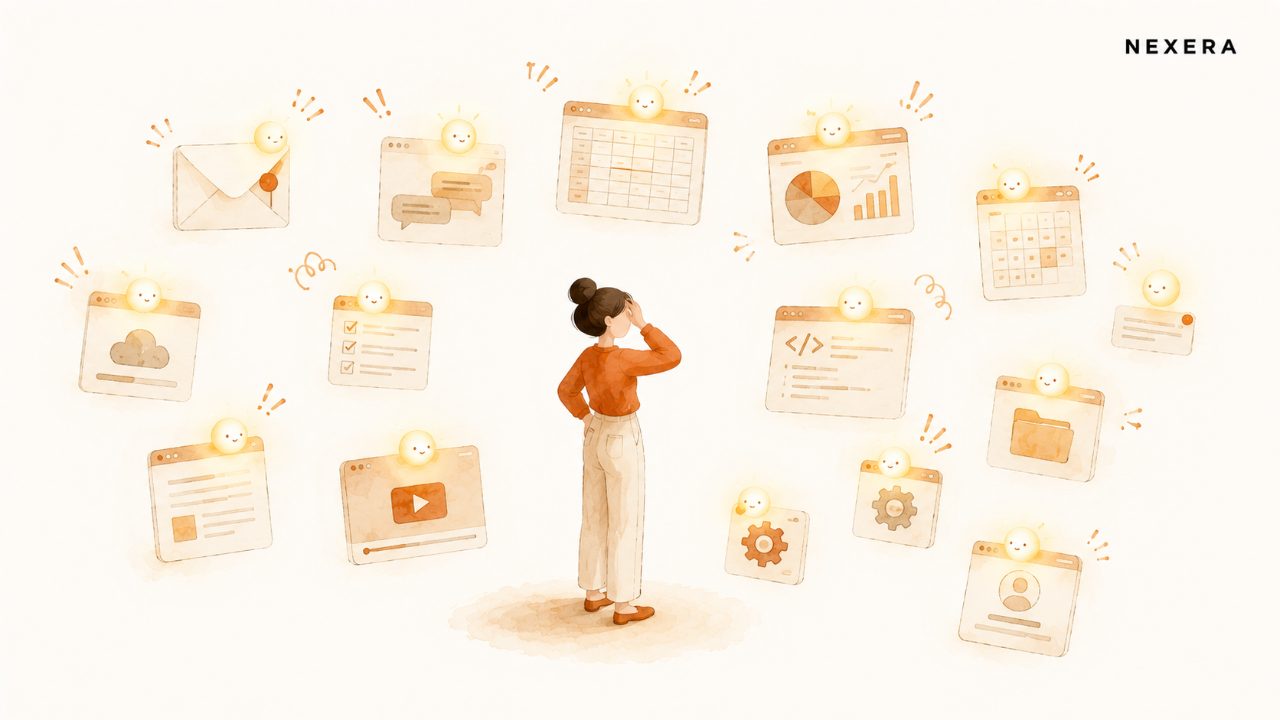
I sat with an owner recently who was proud that nearly every tool in his business had AI in it now. So I asked which one had saved him an hour that week. Long pause. The features were everywhere. The plan was nowhere.
A tool being able to do something is not the same as that thing being worth doing. The AI inside your software will gladly draft, summarize, score, and schedule all day long. Some of that is real time handed back to you. A lot of it is busywork wearing a fresh coat of paint.
The work that is left is judgment
The setup got easier. The thinking got harder, and more valuable.
When AI was a separate app, the hard part was getting started. Now that it is everywhere, the hard part is choosing. Which two or three tasks in your week actually drain your time. Which of these new buttons touch those tasks. Which ones you can let run on their own, and which ones still need a person to read the work before it leaves the building.
Say your slow spot is invoicing. The forecasting tool in your books is impressive, but it is not your bottleneck. The quiet little reminder feature that chases unpaid invoices is. Picking that one over the flashier one is the whole game, and no vendor is going to make that call for you.
None of that is a software question. It is a judgment question. And it is the same judgment whether the AI sits in a chat window or inside your accounting software.
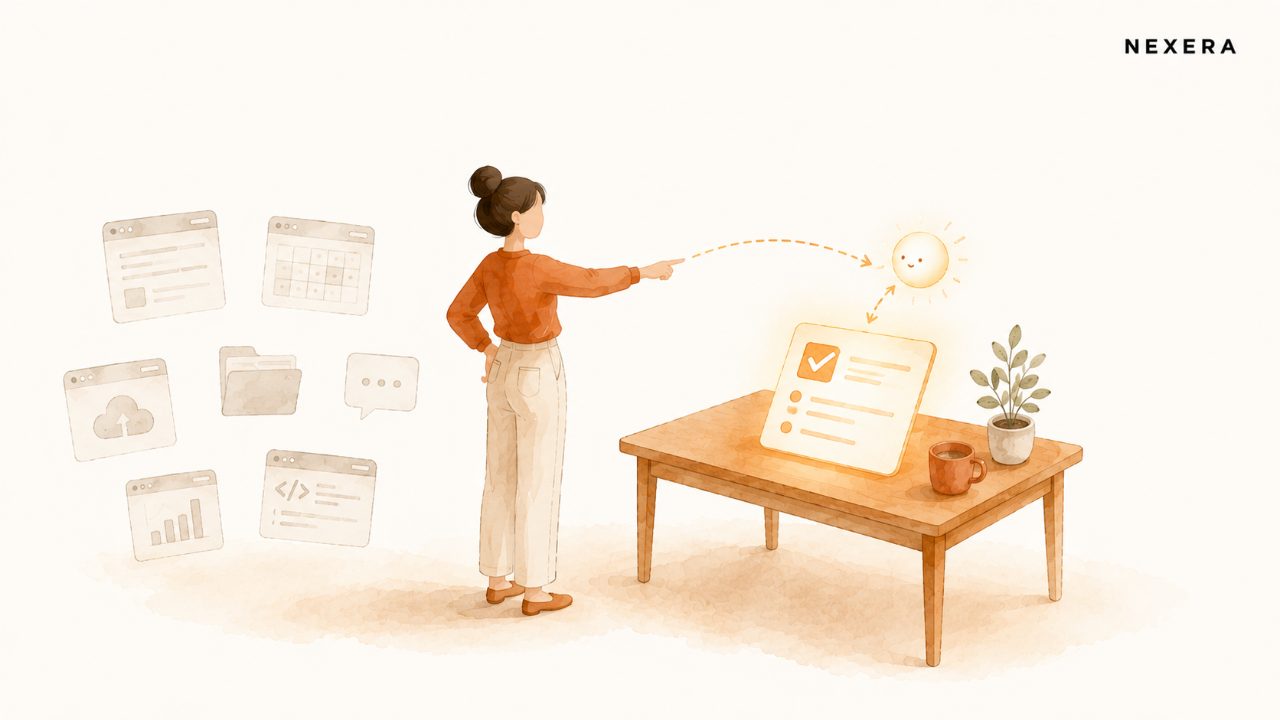
The owners who pull ahead this year will not be the ones with the most AI features switched on. They will be the ones who picked the right two and ignored the other ten.
Where this leaves you
The AI stopped being a destination. It became a coworker who is already in the building, sitting inside the tools you open every morning, waiting to be told what actually matters.
You do not have to go find it anymore. You just have to give it a job worth doing.
If you are looking at a pile of tools that all suddenly have AI in them and you cannot tell which one deserves your attention, that is the conversation we have with business owners every week. No pitch. Just sorting out where AI earns its place in your business and where it does not. You can start that conversation at nexeraintelligence.com.
Want one of these every other week?
Field notes from active Nexera engagements. No newsletter theater, no growth-hacks. Drop a line on a 30-min consult and we will add you to the rare-send list.