
Jul 9, 2026 - 5 min read
Your Customers Already Told You What to Fix
You probably already have the answer to why customers leave. It is buried in reviews, emails, and passing comments nobody has time to read. AI can finally read all of it in one pass.

A client of mine spent most of the spring convinced her prices were too high. She runs a small skincare studio across the river in Jersey, business had gone soft, and every time we talked she came back to the same fix. Run a promo. Tighten the packages. Maybe drop a service. So she did all of it. Nothing moved.
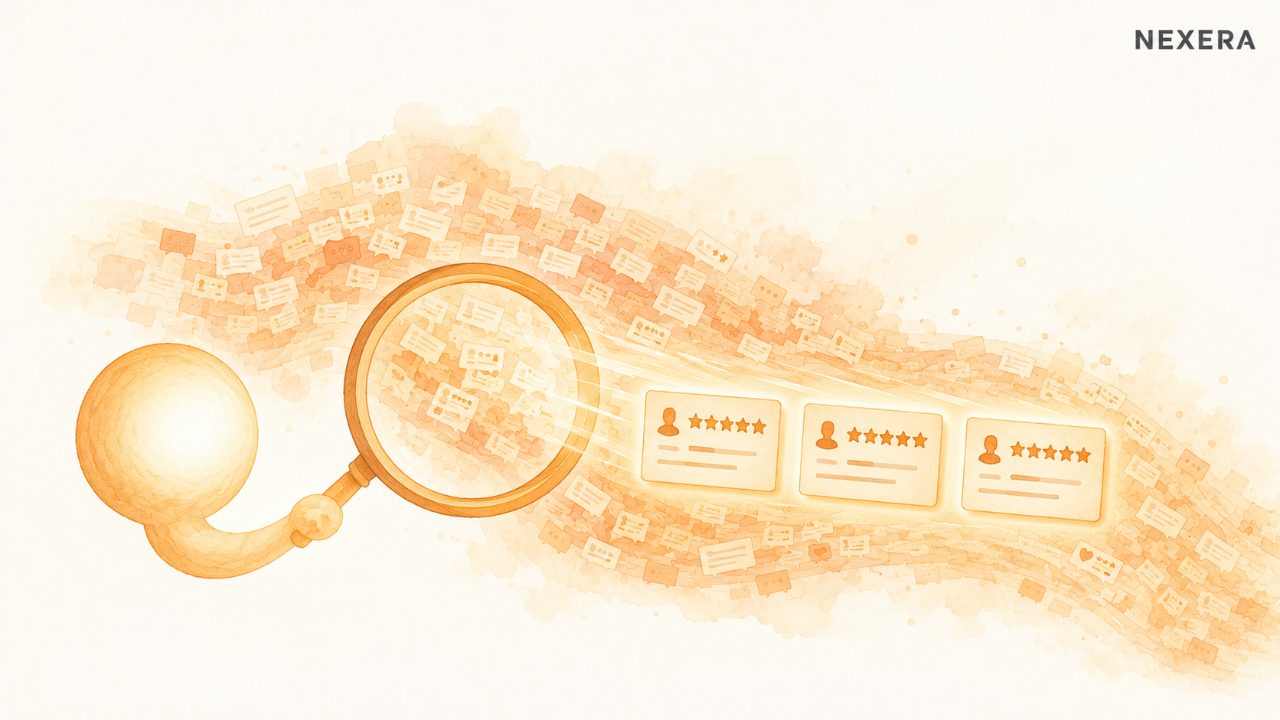
Then we tried something she had never done. We pulled two years of her Google reviews, her booking emails, and the little notes people leave when they cancel, and we had an AI read the whole pile in one sitting. Price came up twice. What came up over and over, worded fifty different ways, was that people could not reach her to book. Calls went to voicemail. The form broke on a phone. Customers wanted to hand her money and could not figure out how.
Her customers had been telling her the answer for two years. It was just scattered across four hundred reviews and a year of email, so no one had ever read it in one place.
The pattern was always there. Reading it was the hard part.
Every business collects far more feedback than it can actually read. The reviews. The same three questions that hit your inbox every week. The reason a customer gives when they walk. The thing someone mentions at the counter on their way out the door.
On its own, none of it registers. A single review is a data point you shrug off by lunch. The forty-first review saying the same thing is a diagnosis. But it is only a diagnosis if someone connects the forty-one, and no owner has the hours to sit and read two years of comments looking for a thread.
So the signal just sits there. Collected, technically. Invisible, in practice. You are not missing feedback. You are missing a way to hear it all at once.

What changed this year
Reading all of it in one pass used to be a job you would have to hire someone for. Now it is a task you can hand to a tool you already pay for.
This month Google started rolling out a Gemini feature that connects straight to your Google Business Profile. Once it is linked, you can ask how the month actually went and it reads your real reviews, customer questions, and search data instead of guessing. You can ask it to brainstorm from what your customers have been writing. It will even draft a reply to a review in your own voice for you to approve before it posts. Google announced it on June 10 and said it would reach owners globally over the following weeks.
You do not need that specific feature to do the core thing, though. Export a year of reviews, or copy a folder of customer emails, drop them into any of the main AI tools, and ask one plain question. What do people keep saying? You will have in ten minutes what used to take a weekend nobody was ever going to give it.
The point is not that the AI writes a prettier response. The point is that it can finally read everything, which is the one thing you never could.
The loudest complaint is not always the right fix
Here is where it stops being automatic. The tool finds the pattern. It does not tell you which pattern actually matters, and those are two very different things.
Sometimes the recurring complaint comes from a vocal handful, and fixing it would annoy the customers who love you exactly as you are. Sometimes the real signal is quiet, mentioned only a few times, but always by your best accounts, and it is the one worth moving on. AI is very good at counting how often something comes up. It has no idea what it would cost you to change, or whether the person complaining was ever going to buy anyway.
That judgment is still yours. You read the summary, you weigh it against what you know about your own business, and you decide what is worth changing. What the tool buys you is the chance to decide with the whole picture in front of you, instead of reacting to whichever angry email you happened to open last.

Collecting feedback was never the problem
Most owners are not short on feedback. They are drowning in it. The reviews come in, the emails pile up, the cancellations get logged, and all of it quietly confirms that customers are talking. The gap has never been listening equipment. It has been the hours to sit and actually hear it.
That gap is where good businesses lose people they could have kept. Not to a competitor with a better product, but to a small, fixable annoyance that three hundred customers mentioned and nobody ever read in one place.
Your customers have been writing you the answer this whole time. For the first time, you can read the entire letter in one sitting.
If you want help pointing these tools at the feedback you are already sitting on, that is the kind of thing we do at Nexera Intelligence. No pitch, just a look at what your customers have already told you.
Want one of these every other week?
Field notes from active Nexera engagements. No newsletter theater, no growth-hacks. Drop a line on a 30-min consult and we will add you to the rare-send list.