
Jun 10, 2026 - 5 min read
Your Whole Business Lives in Your Head
Ask a small business owner where their customer records live and they'll point at a screen. Ask them where the business actually lives and, if they're honest, they'll point at...

Ask a small business owner where their customer records live and they'll point at a screen. Ask them where the business actually lives and, if they're honest, they'll point at their own head.
The price you quoted that one client because of that one situation. The supplier who's flexible on timing but not on quantity. The customer who always pays late but always pays. The reason you stopped using that vendor two years ago. None of it is written down anywhere useful. It's all in you.
That works fine until it doesn't. You take a week off and the quotes stop. You hire someone and spend three months answering questions only you can answer. You wake up at 2am because you remembered the thing nobody else was going to remember.
For most small businesses, the single point of failure isn't cash flow or competition. It's the owner's memory.
The Notebook Problem
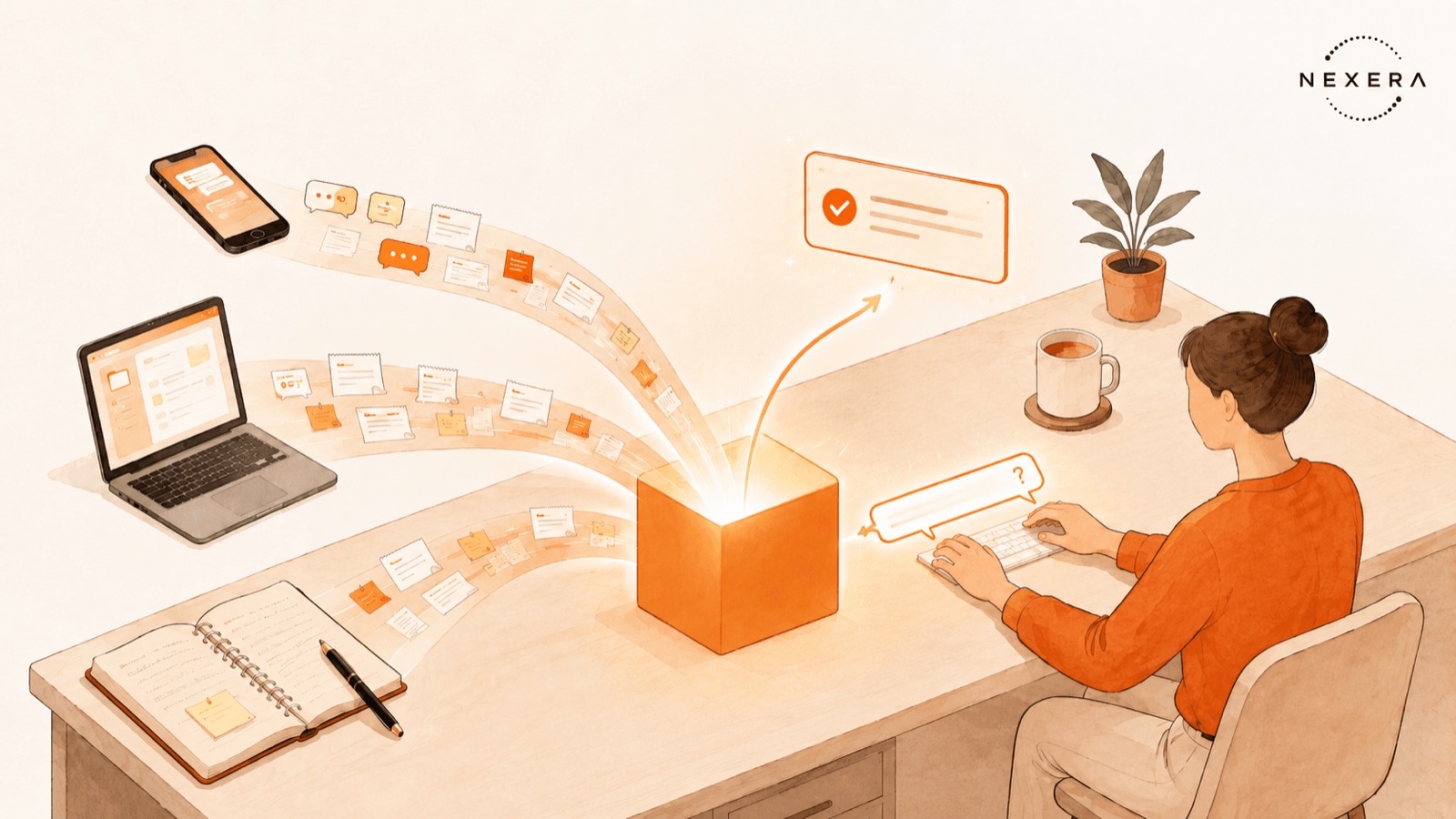
Here's the pattern I see constantly. Owners do write things down. They're not careless. The notes just end up everywhere.
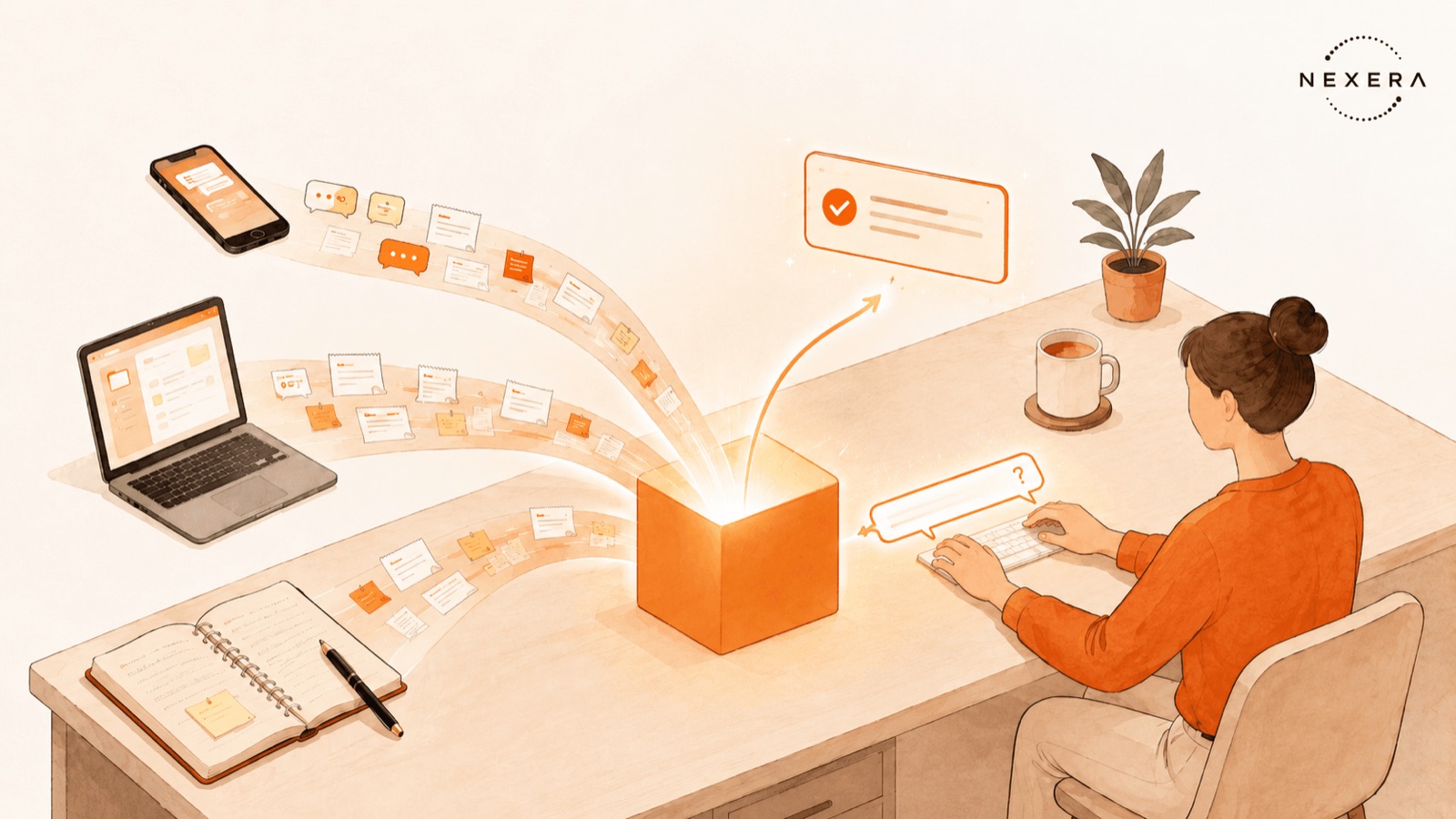
A client detail in the phone. A pricing decision in an email thread. A lesson learned in a notebook from 2024. A process that exists only as a text message to yourself. Each note made sense in the moment. Together they add up to nothing, because no single place holds the full picture, and you'd never find the right note when you need it anyway.
So the notes pile up and the head stays the real database. Writing things down was never the problem. Finding them again was.
What Changed This Month
MIT Technology Review just ran a piece in its Making AI Work newsletter about exactly this. It followed a tutor in London who runs a small teaching business on the side. His client notes, lesson plans, reminders, and invoices were scattered across dozens of digital notebooks.
His fix wasn't a better filing system. He handed the whole mess to an AI tool and let it act as what he calls a second memory. It records his client sessions with their consent, summarizes them, and connects details he jotted down in completely different places, sometimes months apart. When a teaching approach isn't working for a student, the pattern shows up in the summaries before he would have spotted it himself.
He still does the actual tutoring. The AI just remembers everything around it.
The same article points to a quilt shop in Yuma, Arizona that uses an AI tool built for craft retailers to write inventory descriptions and price its fabric stock. The owners say it cut their listing time by 60 to 80 percent. Not because the AI is brilliant. Because it never forgets what's in stock, what sold, and how the last hundred listings were worded.
A Second Memory Beats a Second Brain
There's a lot of talk about AI as a "second brain," and I think that framing actually scares owners off. It sounds like the AI is supposed to think for you. Make calls for you. Be you.
That's not what's working in these stories. The thinking stays with the human. What the AI took over is the remembering.
And remembering is the perfect job to hand off, for three reasons.
It's the work you're worst at. You're running a business. Holding four hundred small details in your head isn't a skill, it's a tax.
It's low risk. If the AI surfaces the wrong note, you glance at it and move on. Nobody loses a client because a summary was imperfect. This is exactly the kind of cheap-mistake territory where AI earns its keep.
And it compounds. Every note, every meeting summary, every logged decision makes the next answer better. Six months in, you have something no new hire could ever give you: a searchable record of how your business actually runs.

How to Start Building One
You don't need a system overhaul. You need a habit and a home.
Pick one place where notes go. Not five. One. Whether that's a notes app with AI built in or a folder an AI assistant can read, the tool matters less than the consistency. The tutor in the MIT piece picked the platform his notes already lived in. That's the right instinct. Go where your information already is.
Then stop writing notes for yourself and start writing them for the system. A note that says "call Jim re: thing" helps nobody, including future you. A note that says what Jim wanted, what you decided, and why gives the AI something to connect later.
Then ask it questions. This is the step most people skip. The value isn't in storing the notes. It's in asking "what did we decide about rush orders last fall?" and getting an answer in ten seconds instead of digging through your phone, your inbox, and your memory of a conversation in a parking lot.
Start with one corner of the business. Client notes. Quotes. Job history. Let it prove itself there before you trust it with more.
The Owner Who Forgets on Purpose
The best part of handing off your memory isn't efficiency. It's what happens to the space it frees up.
When you're not the only place where institutional knowledge lives, vacations become actual vacations. Training a new hire means pointing them at the record instead of scheduling six weeks of sit-downs. And selling or stepping back from the business someday stops being unthinkable, because the business finally knows what you know.
Your competitors are mostly using AI to write faster emails. Fine. The bigger move in 2026 is quieter: getting everything that lives only in your head into a system that can hand it back the moment anyone needs it.
You built the business. You shouldn't have to be its hard drive too.
If you're not sure where to start moving the business out of your head, that's a conversation we have with owners all the time. Nexera Intelligence helps small and mid-sized businesses set up AI that fits how they already work, starting with the unglamorous pieces that pay off fastest. Find us at nexeraintelligence.com.
Want one of these every other week?
Field notes from active Nexera engagements. No newsletter theater, no growth-hacks. Drop a line on a 30-min consult and we will add you to the rare-send list.